How to Use a Scarf Without Overcomplicating an Outfit
Three ways to wear a scarf, sorted by effort: a drape, a single wrap and two simple knots, with notes on which cloths suit each.
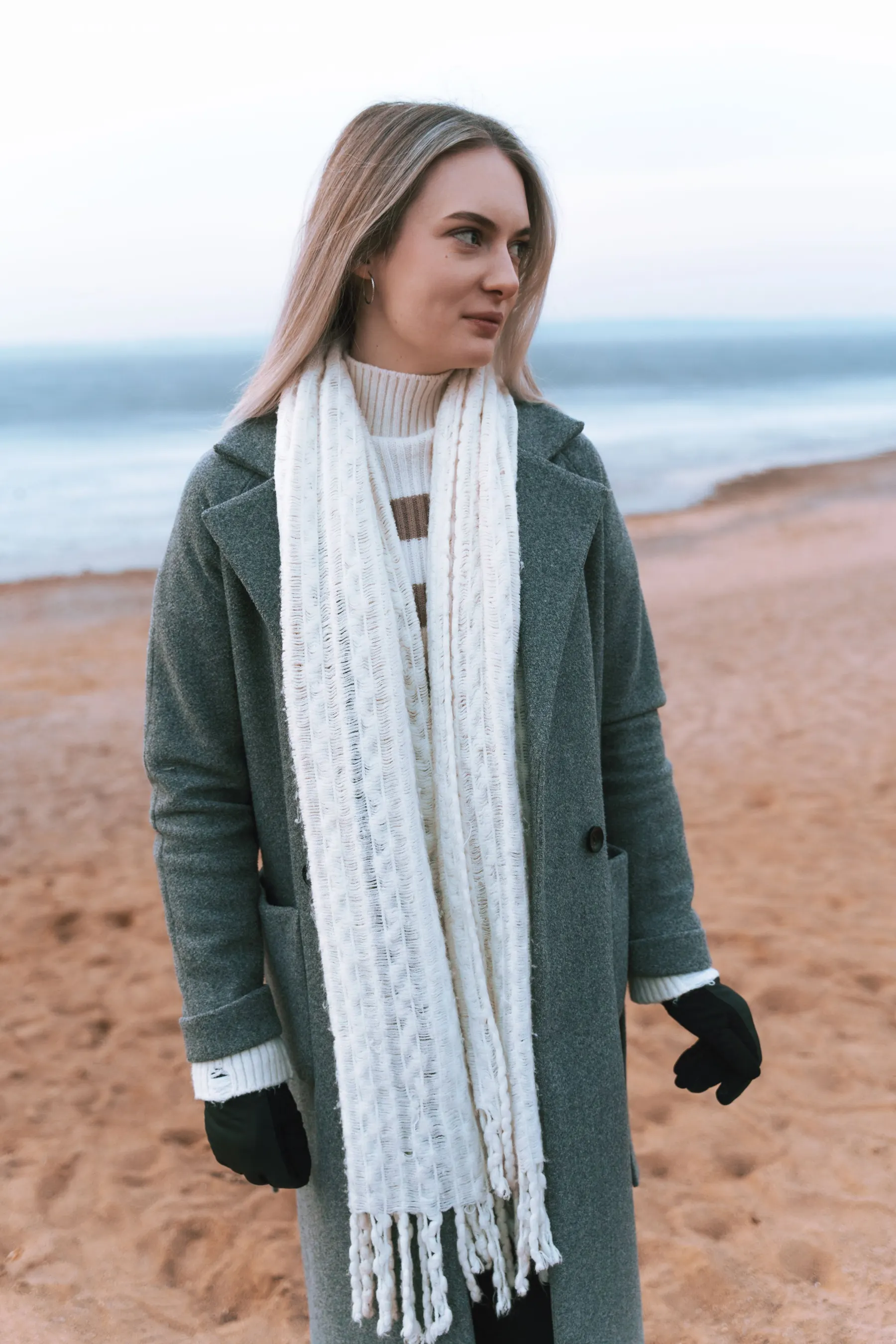
It is a quarter past eight, the coat is on, and the scarf comes off its hook. What happens in the next five seconds is, for most people, the same thing that happened yesterday: once round and out of the door. That is a perfectly good method. It is also only one of three, and knowing the other two means the same scarf can look relaxed, tidy or deliberate depending on the day.
The three are sorted here by effort: no movement at all, one movement, and two. Nothing in this article needs a diagram.
No movement: the drape
Put the scarf round the back of your neck and let both ends hang down the front. That is all. The two ends make a pair of long vertical lines down the chest, framing whatever is underneath.
The drape suits long, narrow scarves in cloth with some weight: fine wool, a wool and silk mix, heavy silk, a smooth knit. It sits well inside an open coat or blazer, where the lapels hold it in place, and it is the least warm option, which makes it right for mild days and for indoors. Uneven ends look more natural than level ones.
A long scarf under an open coat
The scarf acts as a strip of colour or pattern between the two halves of the coat, like a second pair of lapels.
- Pieces
- Navy or camel wool overcoat worn open, grey crew-neck jumper (sweater), dark trousers, a long scarf in burgundy, bottle green or a muted check.
- Swaps
- A blazer in place of the coat, with a lighter silk or cotton scarf. A cream scarf against a black coat for the strongest contrast. A denim jacket with a printed cotton scarf in spring.
- The detail
- Length. Ends that finish around the bottom of the ribs look neat; ends that reach the hip make a longer line and move more as you walk.
One movement: once round
Start with the drape, then take one end across the front and over the opposite shoulder, or right round the neck so that both ends come back to the front. This is the everyday wrap. It closes the gap at the collar, so it is warmer, and it puts a soft mass of fabric directly under the face.
How it looks depends almost entirely on how tightly you pull it. Loose, with the loop sitting on the collarbone, it reads as casual and shows some of the neck. Snug under the chin, with the ends tucked into the coat, it is a cold-weather fastening and little more is visible than a band of colour.
With a large square or a wide rectangular scarf, the same single movement becomes a wrap over the shoulders: unfold it, put it round you like a small blanket, throw one end over the opposite shoulder. That is a layer more than an accessory, and useful on the kind of day described in our piece on layering for cool mornings and warm afternoons, since it comes off and goes into a bag in a moment.
A wool scarf wrapped once, ends in front
The standard winter arrangement, made a little more considered by choosing the scarf as the one colour in the outfit.
- Pieces
- Charcoal or black coat, buttoned; a medium-weight wool scarf in rust, mustard or mid-blue; jeans or wool trousers; boots.
- Swaps
- A tonal scarf, such as grey on charcoal, for a quieter effect. A padded jacket or parka with a chunky knitted scarf, the ends left out. A wide scarf opened over the shoulders of a blazer when the coat stays at home.
- The detail
- Bulk at the back. Flatten the scarf where it crosses the nape so the coat collar can sit over it; a roll of fabric pushing the collar up is what makes a wrap look untidy.
Two movements: a knot
There are many scarf knots. Two cover nearly everything.
The pull-through. Fold a long scarf in half lengthways so it forms a loop at one end. Put it round your neck, then pass the two loose ends through the loop and pull gently. It sits flat and symmetrical on the chest, stays put in wind, and fills the V of a coat or jacket neatly. It needs a scarf long enough to fold, and it looks bulky in very thick knits.
The small knot. For a square scarf or bandana: fold it corner to corner into a triangle, then fold or roll from the long edge towards the point until you have a band a few centimetres wide. Put the band round your neck and tie the ends once, or twice for a firmer knot. Worn with the knot to the front or slightly to the side, it sits inside an open shirt collar, above a crew-neck T-shirt, or at the neck of a jumper.
The small knot is the most deliberate of the three methods and the one that works indoors, in summer and without a coat. It also sits exactly where a necklace would, so it is usually one or the other; our guide to jewellery and necklines looks at how much a given neckline can hold.
A knotted square at an open collar
A small amount of print, placed at the neck of otherwise plain clothes.
- Pieces
- White or pale blue shirt with the top two buttons open, a cotton or silk square in a print with navy or red in it, chinos or jeans, loafers or plimsolls.
- Swaps
- A plain T-shirt and a cotton bandana for the weekend. A fine-gauge crew-neck jumper with the knot just showing above the neckline. The same square tied to a bag handle or round a ponytail on days when the neck is too warm.
- The detail
- The ends. Short ends tucked under the collar look tidy; longer ends left out look jaunty. If the knot feels like too much, turn it to the back and let only the band show.
The cloth decides more than the method
The same wrap looks entirely different in different fabrics, and most scarf frustrations come from asking a cloth to do something it cannot. Slippery silk will not hold a loose wrap and needs a knot. A thick knitted scarf will not knot neatly and is happiest draped or wrapped once. Fine wool and cotton sit in the middle and will do all three.
Texture does quiet work here too. A matt, slightly hairy wool scarf against a smooth coat, or a crisp cotton bandana against soft jersey, adds interest even when the colours are close; the same thinking runs through our piece on combining textures in a simple outfit. Wool and cashmere scarves need the same care as knitwear, and the washing and storage advice in our knitwear care guide applies to them, subject always to the label on the scarf itself.
Colour and pattern, right under the face
A scarf sits closer to the face than almost any other piece of clothing, so its colour is the one people see with you. That makes it an easy place to wear a shade you like but would not choose for a whole coat or jumper.
With pattern, the scale changes once the scarf is on. A large print that looks busy when flat becomes a few abstract patches of colour once wrapped, and often reads as calmer than expected. Small regular patterns, such as dots, fine stripes and small checks, stay recognisable. If the rest of the outfit is patterned, a plain scarf in one of the pattern’s colours ties things together without competing.
When a scarf feels complicated, the usual cause is that it has been given two jobs at once: a difficult knot and a loud print and a contrast colour. Pick one. A plain scarf in an unexpected colour, wrapped once, is enough.