Layering for Days That Start Cool and End Warm
A day followed hour by hour, from a cold 07:40 start to a warm afternoon and back: what each layer is for, what comes off, and where it goes.
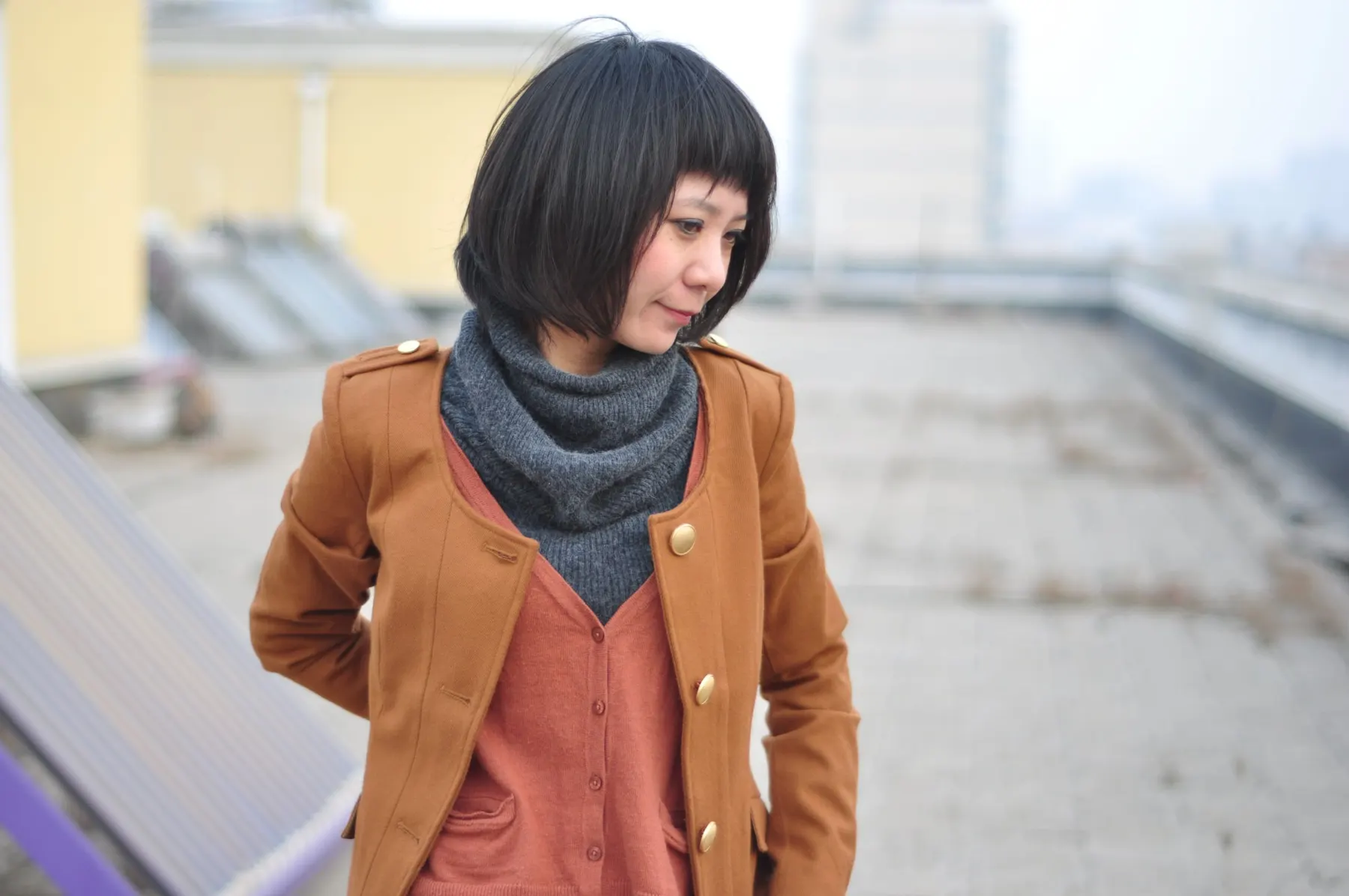
07:40. You leave the house and the air is sharp enough to make you pull your sleeves over your hands. 11:00. The office, the train or the café is heated and you are too warm. 15:00. The sun is out, the jacket is over your arm and you wish it were somewhere else. 18:30. The temperature drops again on the way home.
A day like this cannot be solved by one well-judged garment. It needs an outfit that still makes sense with pieces taken away, and somewhere for those pieces to go. Below, the day is taken stage by stage, with each layer given a job.
Before you leave: three layers, each wearable on its own
The useful way to think about layers is by function. The base sits against the skin and is what you will be seen in at the warmest point of the day. The middle adds warmth and can come off indoors. The outer deals with wind and the first cold hour.
The test for the whole outfit is simple: would you be content to be seen in the base alone, and in the base plus the middle? If the T-shirt under your jumper is one you would never wear by itself, you are committed to the jumper all afternoon. Several thin layers also give more settings than one thick one. A shirt, a light knit and an unlined jacket offer four combinations; a T-shirt and a heavy coat offer two.
07:40, the cold start
All three layers are on, and the smallest items are doing a surprising amount. A scarf closes the gap at the neck where a jacket lets in air, and it is the easiest thing to remove and pocket once you warm up; there are several simple ways to tie one in how to use a scarf without overcomplicating an outfit.
Shirt, fine knit, chore jacket
Three thin layers of different textures. Any one can come off and the remaining two still look like an outfit.
- Pieces
- A pale blue cotton shirt, a fine-gauge wool crew-neck jumper (sweater) in bottle green, a navy cotton chore jacket or unlined blazer, straight-leg jeans or chinos, leather trainers (sneakers) or boots, a light scarf.
- Swaps
- A long-sleeved T-shirt as the base on casual days. A cardigan in place of the crew-neck, so that it can be unbuttoned rather than pulled off. A light rain shell as the outer layer if showers are forecast.
- The detail
- The shirt collar over or under the jumper’s neck. Tucked inside looks neat; both collar points out looks more relaxed. Whichever you choose, it is what remains visible when the jacket is zipped or buttoned.
11:00, indoors and too warm
The outer layer goes on a hook or a chair, and the middle layer becomes the outfit. This is where its fabric matters. The Woolmark Company describes Merino wool as helping to regulate the body’s microclimate by absorbing moisture vapour and releasing it into the air, and as a fibre that reacts to changes in body temperature. That is the case for a fine wool knit as the middle layer on days that swing between cool and warm.
It is a description of the fibre, not a promise about any particular garment: thickness, knit structure and what the wool is blended with all change how a jumper feels. If you find wool itchy or too warm, a cotton cardigan or a sweatshirt does the same structural job in the outfit. How cotton and other plant-based fabrics behave is covered in cotton, linen and viscose: understanding everyday fabrics.
Visually, the outfit has just lost its darkest, most structured piece. If it now looks unfinished, the usual reason is that the middle layer was chosen only for warmth. A knit in a definite colour, such as green, rust or cobalt, holds the outfit together on its own in a way that a thin grey one often does not.
15:00, the warm part of the day
Now the base layer is on show, and two layers need somewhere to live. This is the stage most outfits are not planned for.
A jumper tied over the shoulders or around the waist is a storage method and a styling choice at once: over the shoulders it adds a band of colour near the face, around the waist it marks the waistline and breaks up a long top. A jacket is harder. An unlined cotton one folds flat into a tote or backpack; a structured blazer does not enjoy that and is better carried over the arm or left where you can collect it. If you often end up carrying a layer, it is worth counting that in when you choose a bag; choosing an everyday bag around what you carry starts from a list of exactly that kind.
Dress or T-shirt, cardigan, light trench
A version built on a base that is a complete summer outfit, with two layers that are easy to remove and carry.
- Pieces
- A short-sleeved midi dress in a print, or a T-shirt with wide trousers, a hip-length cardigan in a colour picked from the print such as coral or teal, a light trench or mac, ankle boots or trainers, tights you can remove if the day turns hot.
- Swaps
- A denim jacket in place of the cardigan. A sleeveless knitted vest over a shirt for a middle layer that warms the body and leaves the arms free. A quilted gilet (vest) as the outer layer in dry weather.
- The detail
- The cardigan’s buttons. Fully fastened it works as a top; open it becomes a soft jacket; draped over the shoulders with only the top button done it stays put while you carry things.
T-shirt, overshirt, gilet
A weekend version in which the middle layer is a shirt worn open, so adjusting it takes one hand.
- Pieces
- A white or ecru heavyweight T-shirt, a checked flannel or plain cotton overshirt in red, green or mustard, a navy quilted gilet, dark jeans or cargo trousers, walking boots or trainers.
- Swaps
- A hooded sweatshirt in place of the overshirt. Shorts with the same top half when the forecast afternoon is properly warm. A packable shell jacket in a pocket in case of rain.
- The detail
- Sleeves. Rolling the overshirt’s sleeves to the elbow is the first adjustment to make as the day warms, before anything comes off, and it changes the look from wrapped-up to relaxed.
18:30, cooling down again
The layers go back on in reverse, and they have had a day of being tied, folded and carried. A jumper knotted tightly by its sleeves for six hours may come back with those sleeves pulled longer than they were. If you notice that, a looser knot, or carrying the jumper folded, is the gentler habit; washing, drying and storing knits is covered in our knitwear care guide, and the care label on the garment comes before any general advice.
If the outer layer stayed over your arm all the way home, take that as the day’s report: tomorrow’s version of the same weather may need only a base, a middle and a scarf.
Sources
- The Woolmark Company Wool Fibre Properties, Facts & Benefits | Woolmark