Knitwear Care: Washing, Drying and Storage
Follow one jumper from the laundry basket to the shelf: when to wash it, how to dry it so it keeps its shape, and how to store it between wears and seasons.
A wet jumper (sweater) is heavier than it looks. Lift one out of a basin by the shoulders and you can watch it lengthen: the body drops, the sleeves reach for the floor, and the neckline opens. Nothing has gone wrong with the wool. In a knitted fabric the yarn is bent into loops, loops can move, and water adds the weight that moves them.
Nearly all knitwear care follows from that picture. Washing, drying and storing each have one moment when the loops are most easily pulled out of shape, and the routine below is arranged around those moments. It draws mainly on the care guidance of The Woolmark Company, which is the wool industry’s own voice and is quoted here as such, and on the international care-symbol definitions, and it is written with wool and wool-blend knits in mind, though the same gentle handling suits knits in other fibres wherever their labels allow it.
Before washing: does it need it?
Woolmark’s starting point is that wool needs washing less often than most fibres, because it resists odours, stains and creasing. A University of Kentucky extension guide on clothing storage makes a complementary suggestion for all clothes: let a garment air at least overnight before it goes back into a drawer or wardrobe, so that trapped moisture can evaporate, and give it at least a day’s rest between wears.
So the first step is often a hanger-free airing over the back of a chair. A jumper worn over a shirt for an afternoon may want nothing more. One worn next to the skin, marked, or about to be put away for the summer does need cleaning, for reasons that come up under storage.
Washing: two routes, chosen by the label
Machine, if the label allows it
A washtub symbol with a temperature and two bars underneath is the international sign for a very mild cycle, and the example GINETEX gives for it is machine-washable wool. For that cycle it advises reducing the load substantially, with the drum no more than one-third full at 40 °C.
Woolmark’s instructions for a machine-washable jumper are short:
- Check the care claim on the label says machine wash.
- Turn the garment inside out, or put it in a laundry bag.
- Use a mild, neutral detergent intended for wool.
- Choose the wool cycle. If the machine has none, use a cold wash or the delicates cycle.
Turning the piece inside out means the rubbing that washing involves happens on the side nobody sees. Woolmark also advises against fabric softener for wool, a point connected with why knitwear pills.
By hand, if the label shows the hand-wash symbol
Woolmark’s hand-wash method is to fill a basin with clean, lukewarm water (it gives approximately 30 °C), add a wool detergent, and let the garment soak for 10 minutes. Then rinse thoroughly in lukewarm water and again in cold.
What you do not do matters as much. GINETEX’s wording for the hand-wash symbol is to let the textile float and agitate it carefully, and not to rub, pull or wring. It also says to press out the surplus water very carefully, pull the piece into shape, and not leave it lying wet. Rubbing and wringing are exactly the actions that distort loops and rough up the surface.
What can go wrong: Woolmark’s assurance that washing happens without shrinkage is given only for garments whose label allows machine washing. For any other wool knit, an ordinary cycle is a risk we would not take. If you are unsure whether a piece is washable at all, do not use it as the experiment; ask a cleaner.
Drying: the stage where shape is decided
This is the moment from the opening paragraph. Woolmark is direct about it: hanging or line-drying knitwear can stretch it because of the weight of the moisture, leaving it longer and misshapen. Knits are dried flat.
- Given what wet weight does, it makes sense to support the whole garment as you lift it from the water, in both hands or in a towel, instead of holding it by the shoulders.
- Lay it on a clean towel. Woolmark specifies a pale or white one with no lint, since lint can transfer to the garment.
- Ease it back into its proper shape and size with your hands and smooth out creases and folds. This is the point at which sleeves are set straight and ribbing is gently pushed back together.
- Leave it flat, out of direct sunlight and away from direct heat. Woolmark adds that mesh drying screens tend to speed things up.
Two shortcuts are worth resisting. Woolmark warns against drying wool over a radiator: the folded section dries fastest and can change colour or be damaged. And a tumble dryer is only for garments whose label says they can be tumble dried, on a low-heat or wool setting; on the international label, the do-not-tumble-dry symbol marks an article as unsuitable for it.
Woven wool is a different case. Tailored pieces such as jackets and trousers can be dried on a hanger, still out of direct sun.
Between wears: surface and shape
A knit dried flat and in shape may need no ironing at all. Where the label permits it, GINETEX matches wool to the moderate iron setting, used through a slightly damp cloth and without heavy pressure, which also seems to us the way to keep the texture of the knit.
Small balls of fibre at the elbows, sleeves and sides are, on Woolmark’s account, the result of rubbing in wear; when there are only a few, it suggests simply removing them by hand. A small hole is worth catching early, when it is still a simple darn; our walk-through of repairs worth considering covers where home mending ends and a specialist begins.
Storing: folded, clean and checked
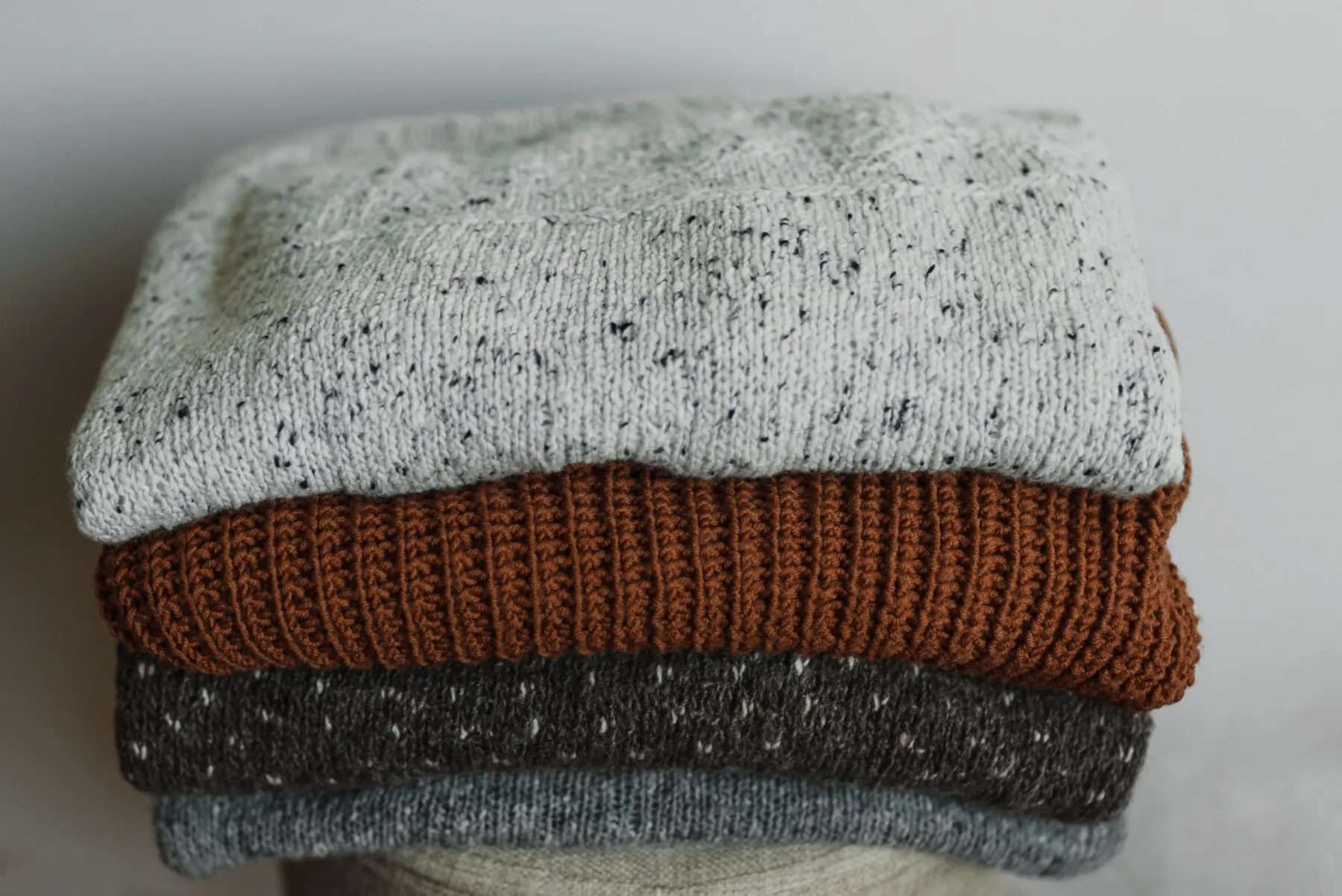
The loops that stretch under the weight of water also stretch, more slowly, under their own weight on a hanger. Woolmark’s advice for storing wool clothes is to fold and not hang, so that garments keep their shape. The Kentucky extension guide puts jumpers and other knitwear, along with heavy or stretchy clothing, in its list of things for flat storage, and warns that the weight of a heavy or knitted garment left hanging for long periods can cause strain and eventually broken threads and holes.
A few details from the same guide make folded storage kinder:
- Fold as few times as possible, and not the same way every time, so that one crease does not become permanent.
- Put the heaviest pieces at the bottom of a stack.
- Keep knits from resting directly on unfinished wood; line the shelf or drawer.
For anything longer than everyday storage, cleanliness becomes the main point. Both Woolmark and English Heritage’s conservators say to clean garments before putting them away, and English Heritage explains why: textiles soiled with food are preferentially attacked by clothes moths, a stained area may be damaged more than a clean one, and the moths particularly like high-quality wool items such as cashmere. It also recommends disturbance, which moths dislike: take things out and shake them at least once a month, and look in the folds.
The full sequence for putting winter knits away, including containers and where the sources disagree about cedar and lavender, is in our guide to preparing seasonal clothes for storage. For the everyday question of which garments belong on a rail and which on a shelf, see hanging or folding.
Sources
- The Woolmark Company How to wash wool
- The Woolmark Company How to wash a wool sweater
- The Woolmark Company How do I dry wool?
- The Woolmark Company How to store wool clothes
- The Woolmark Company What is pilling?
- GINETEX Care symbols
- University of Kentucky Cooperative Extension Service Clothing Storage (CT-LMH.144, revised 01/02)
- English Heritage Top Tips for Preventing Clothes Moth Infestations (PDF, May 2021)
- English Heritage Clothes moths - prevention and control (PDF guideline)
- CottonWorks (Cotton Incorporated) Shrinkage & Skewing