One Blazer, Five Everyday Outfits
A single navy blazer worn five ways across a week, from a T-shirt and jeans to a printed dress, with the small adjustments that change how it reads.
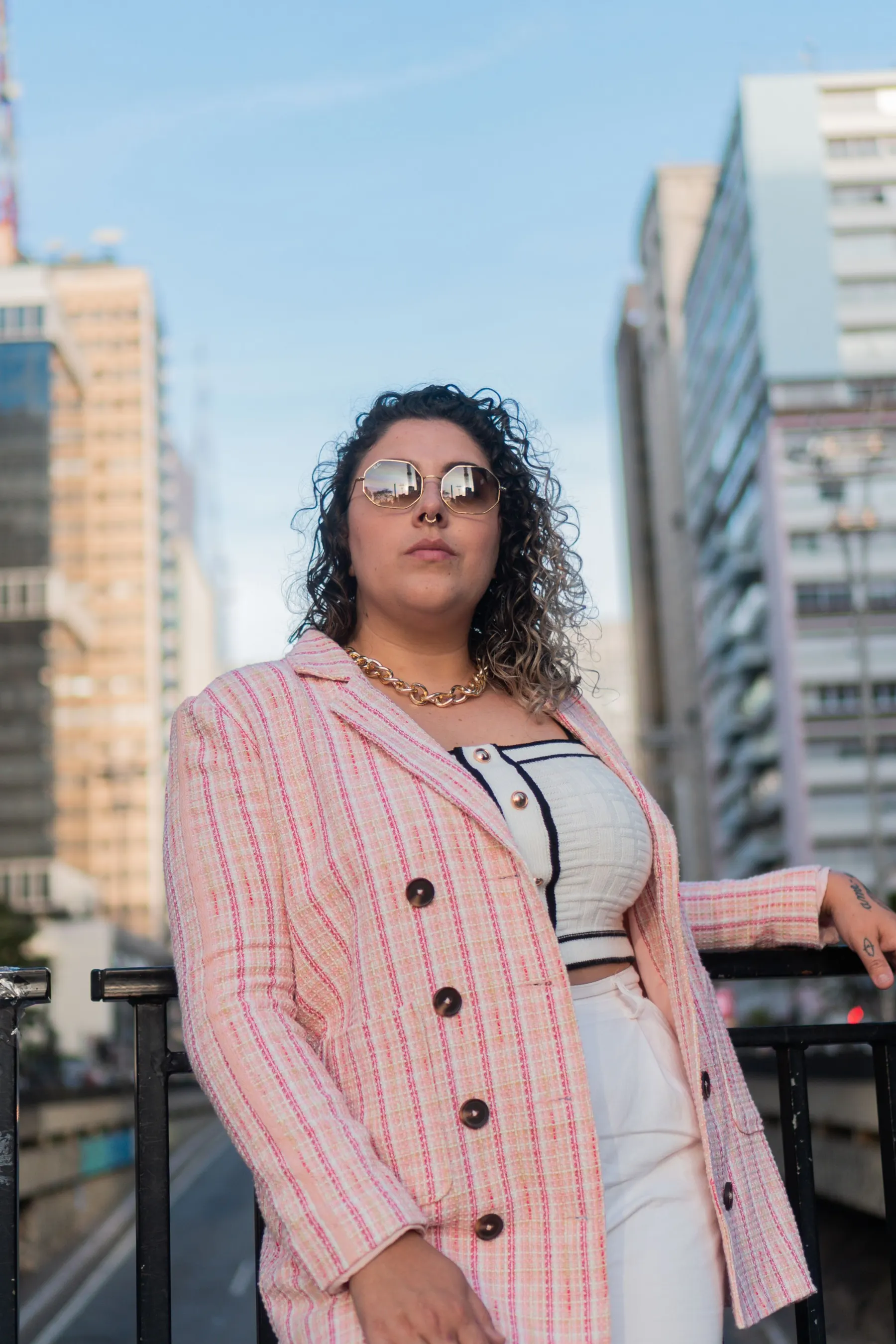
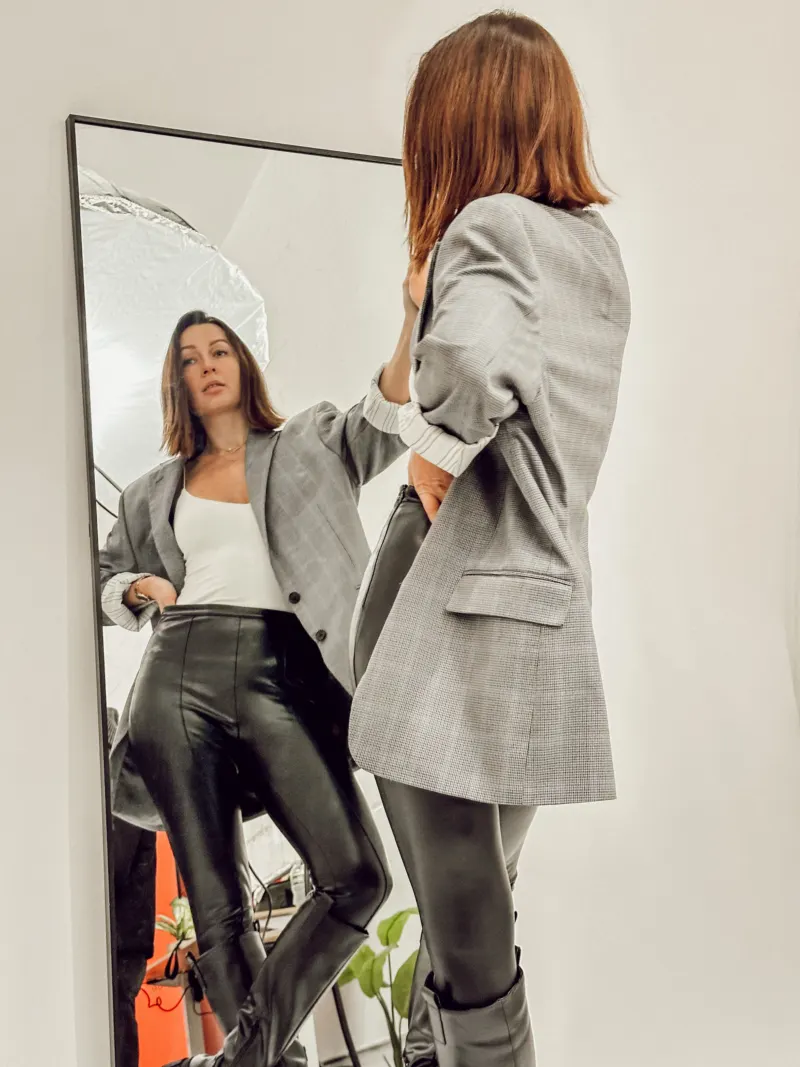
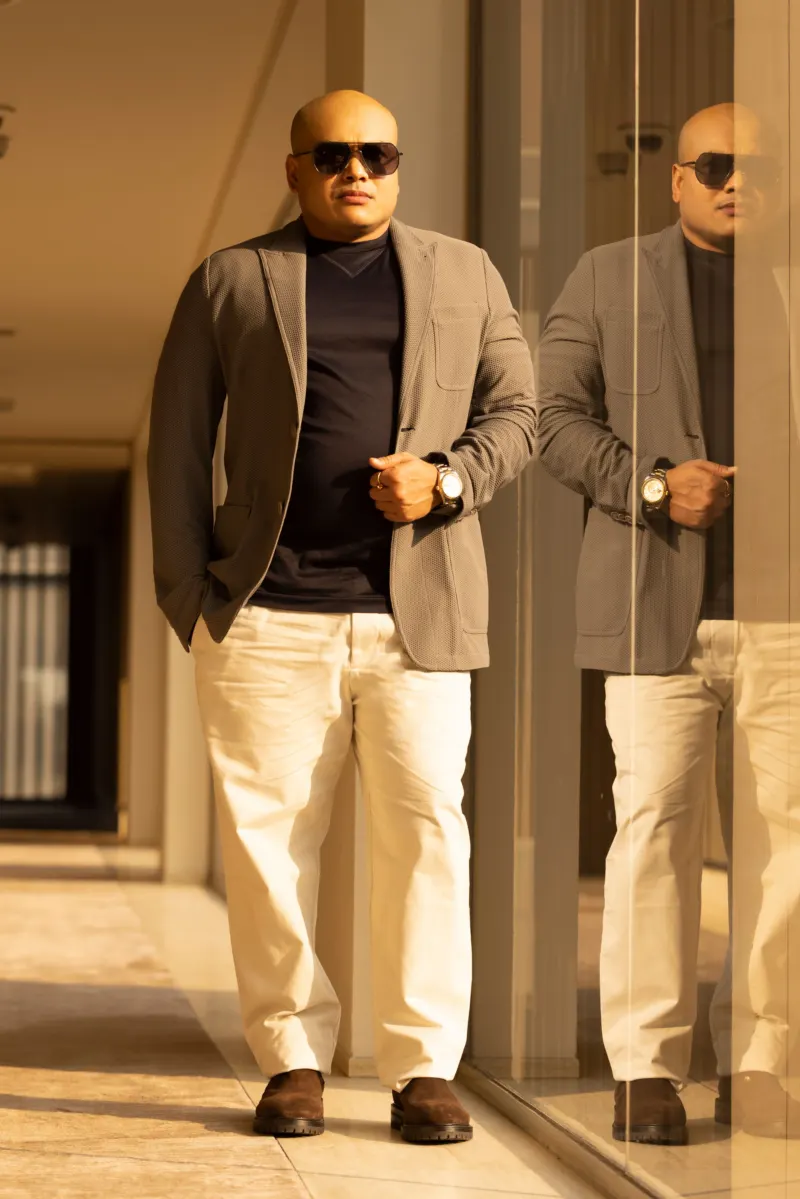
Take one blazer out of the wardrobe and leave it on the back of a chair for a week. The one used here is navy, single-breasted, in a matt wool or wool-mix cloth, with soft shoulders and no shine. If yours is grey, olive, brown or checked, every combination below still works with small changes of colour.
The point of the exercise is to see how much of an outfit’s character comes from what surrounds the jacket rather than from the jacket itself. The same garment can read as office, weekend or evening depending on what sits at the neck, how the sleeves are worn and what is on your feet.
What a blazer brings to an outfit
A blazer adds three things at once: a defined shoulder line, a long V at the front made by the lapels, and a hem that lands somewhere around the hip. Those are useful to know because each outfit below plays with one of them. A T-shirt under the V makes it look open and relaxed; a buttoned shirt fills it in and looks more formal. Loose trousers below the hem make the jacket look shorter and neater; narrow ones make it look longer.
Cloth matters as much as cut. A matt, slightly textured blazer sits comfortably next to denim and knitwear, while a smooth, sharp suit jacket tends to look as though its trousers have gone missing. If you are still deciding whether a particular jacket fits, our notes on what to check when trying on a blazer go through collar, shoulders, chest and sleeves in order.
Monday to Friday: three ways to wear it with a plan
With a white T-shirt and straight jeans
The most familiar combination, and a good baseline: tailoring on top, something plain and soft underneath. It works because the three pieces are at three different levels of formality and none of them wins.
- Pieces
- Navy blazer, white crew-neck T-shirt in a fairly heavy cotton, mid-blue straight-leg jeans, white leather trainers (sneakers).
- Swaps
- A grey marl T-shirt if white feels stark. Black jeans for the evening. Loafers or ankle boots when trainers are too casual for where you are going. In cold weather, a fine roll-neck in place of the T-shirt.
- The detail
- The T-shirt neckline. A close, flat crew neck looks tidy inside lapels; a stretched or very low neckline makes the whole outfit look tired, however good the jacket is.
With a striped shirt and grey trousers
This is the blazer at its most office-like, loosened by a pattern. Navy and grey are close in depth, so the stripe does the work of keeping the two from blending into a uniform.
- Pieces
- Navy blazer, blue-and-white striped cotton shirt, mid-grey wool or wool-mix trousers, dark brown leather loafers or lace-ups, a belt in the same brown.
- Swaps
- A plain pale blue or pink shirt if stripes are not your thing. Stone chinos in warm weather. From a women’s wardrobe, a mid-grey midi skirt in place of the trousers keeps the same balance of colour.
- The detail
- The collar. Worn open with one button undone and sitting inside the lapels it looks relaxed; fastened to the top, with or without a tie, it looks deliberate and rather sharper.
Over a rust jumper with dark chinos
A warm colour under a cool navy jacket is one of the simplest ways to bring colour into tailoring. Only a strip of the jumper shows, so even a strong shade stays in proportion.
- Pieces
- Navy blazer, fine-gauge crew-neck jumper (sweater) in rust or burnt orange, dark olive or charcoal chinos, brown suede boots.
- Swaps
- Mustard, forest green or burgundy knit instead of rust. A sleeveless knitted vest over a shirt if a full jumper is too warm under a jacket. Dark jeans in place of chinos.
- The detail
- The gauge of the knit. A thin, smooth jumper lets the jacket hang cleanly; a chunky one strains the sleeves and pulls the buttons, in which case the blazer is better worn open.
The weekend: taking the formality out
A blazer starts to look relaxed when it is treated as a light jacket rather than as tailoring. That mostly means wearing it open, pushing the sleeves up and putting it over things with visible texture. If you like thinking about why a ribbed knit and a smooth wool sit well together, there is more in our piece on how to combine textures in a simple outfit.
Over a hooded sweatshirt
Two opposites, layered. The hood breaks up the lapel line and makes the jacket read as outerwear, which suits errands, travel and cool evenings.
- Pieces
- Navy blazer, plain grey hooded sweatshirt, black or dark indigo jeans, trainers or sturdy boots.
- Swaps
- A crew-neck sweatshirt if the hood feels bulky at the back of the neck. A quilted gilet (vest) under the blazer in place of the sweatshirt when it is colder. Jogging-style trousers in a heavy plain jersey for a softer version.
- The detail
- Room in the shoulders. This only works if the blazer has enough ease to sit over the sweatshirt without the sleeves riding up; if it pulls, a thin long-sleeved T-shirt gives a similar effect.
Over a printed dress, or with wide trousers and a vest top
From a women’s wardrobe, a blazer over something fluid sets structure against movement. The jacket gives a dress a firmer outline at the shoulder and makes it usable on days that are too cool for the dress alone.
- Pieces
- Navy blazer, a midi dress in a floral or geometric print with some navy or green in it, flat ankle boots or plain leather sandals.
- Swaps
- Cream wide-leg trousers and a fitted ribbed vest top in place of the dress. Tights and knee boots in winter. A plain slip skirt and T-shirt if you have no printed dress.
- The detail
- The sleeves. Pushed up to just below the elbow, they show the wrist and stop the jacket from looking like a coat that has been borrowed; a narrow belt over the dress, under the open jacket, changes the outline again.
Small adjustments that do more than a new piece
Across the five outfits the jacket never changed, but a handful of small settings did. Buttoned or open is the largest: one fastened button pulls the jacket into a clear shape, while an open front makes a long vertical line down the middle of the outfit. Sleeves pushed up, a collar turned slightly at the back, a pocket square or nothing in the pocket all move the same garment a step towards or away from the office.
Shoes move it further than anything else. Trainers, loafers and boots under identical jeans and jacket produce three different outfits, and the hem of the trousers has to agree with each of them; our guide to matching shoes to trouser shapes covers that join in detail.
If one of the five felt wrong, change only the layer under the jacket and try again before deciding the blazer is the problem. It is usually the neckline.