Matching Shoes to Trouser Shapes: A Practical Guide
A pairing table for six trouser shapes and three weights of shoe, four combinations in detail, and how hem length, socks and colour settle the join.
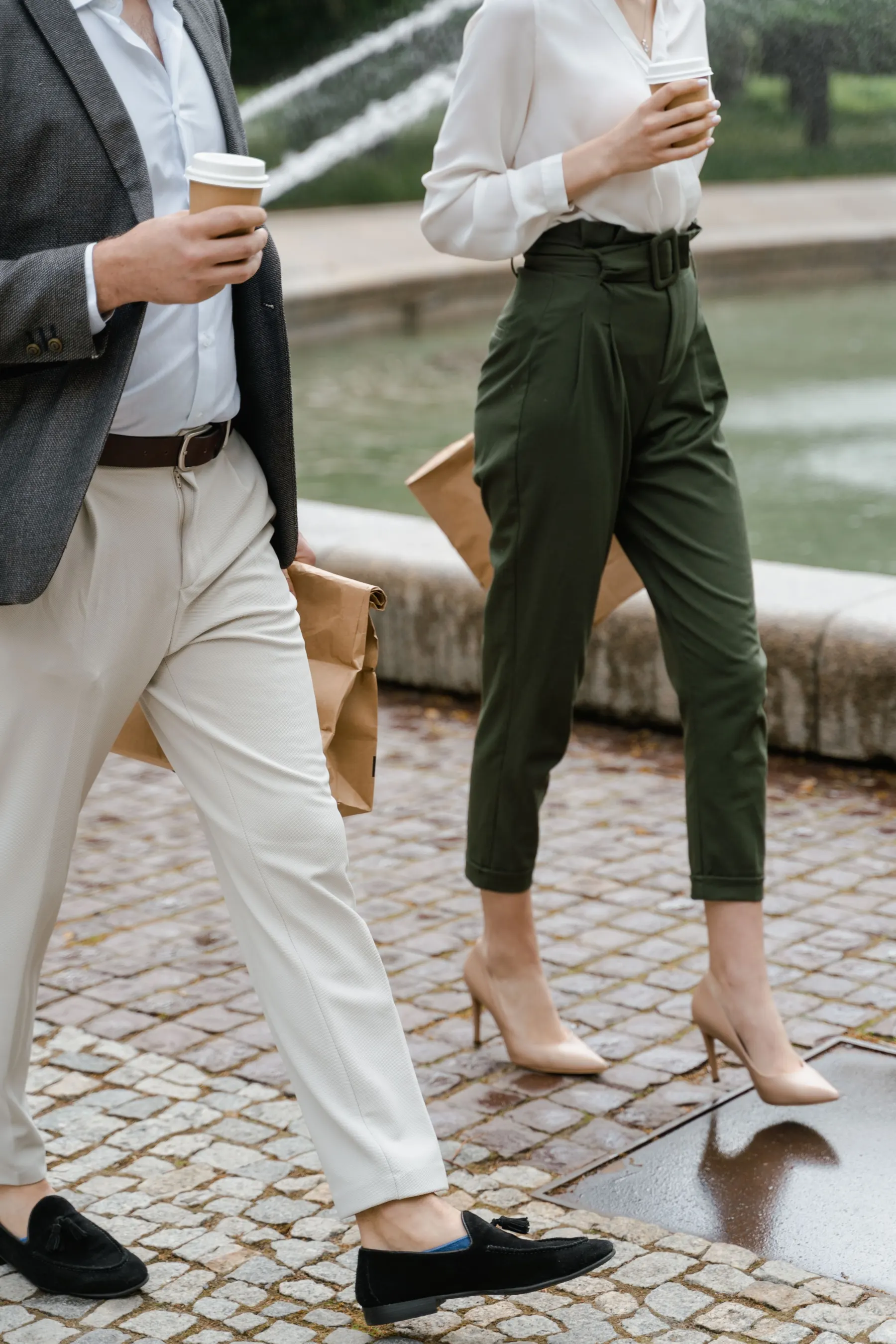
Where does the trouser end and the shoe begin? In most outfits that join occupies a few centimetres just above the floor, and yet it is often the place to look when an outfit seems off and you cannot say why. A good pairing is rarely about the shoe or the trouser alone. It is about how the hem meets the shoe: whether it rests on it, covers it, stops short of it, or leaves a strip of sock or ankle in between.
Two things to look at: the opening and the shoe’s bulk
The leg opening is the width of the trouser at the hem. A narrow opening sits close to the ankle and shows the whole shoe. A wide opening hangs away from the leg and covers part of the shoe, sometimes most of it.
The bulk of a shoe is how much visual weight it has: the thickness of the sole, the height of the upper, the roundness of the toe. A ballet flat and a fine loafer are slight. A plain leather trainer (sneaker) or a derby is medium. A chunky-soled boot or a padded running shoe is heavy.
Most pairings that look settled follow one of two logics. Either the hem and the shoe are similar in scale, so the leg flows into the foot, or they are deliberately different, so that one of them is clearly the point. Trouble tends to come from the in-between: a hem that half-covers a shoe, or a wide leg that buries a small shoe so the foot seems to vanish.
Shoe by trouser shape
The table gives a starting point for each combination. “Works easily” means few adjustments are needed; the notes say what to watch.
| Trouser shape | Slight shoes (ballet flats, fine loafers, slim sandals) | Medium shoes (leather trainers, derbies, desert boots) | Heavy shoes (chunky boots, thick-soled trainers) |
|---|---|---|---|
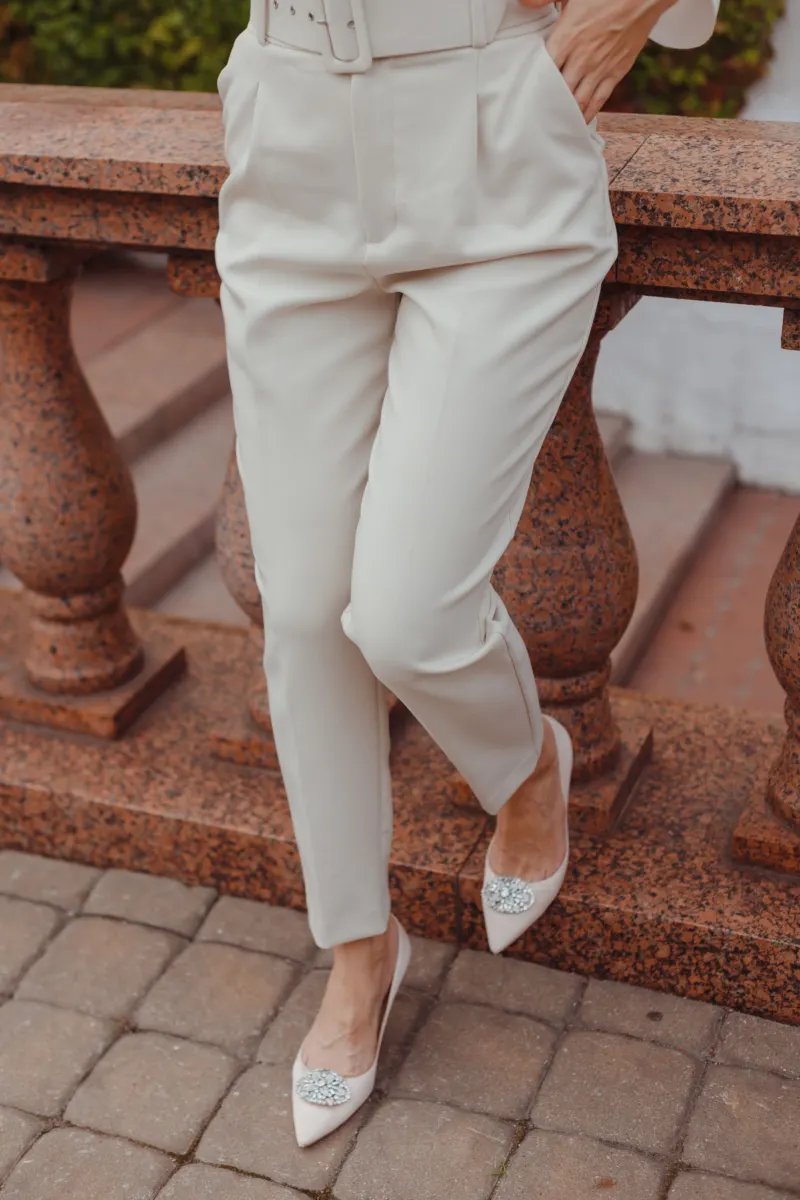
| Slim or tapered, ending at the ankle | Works easily; the whole shoe shows, and so does the ankle or sock | Works easily; the most common everyday pairing | A deliberate contrast: narrow leg, large foot. Clearer if the hem stops above the boot |
| Straight leg, full length | Works if the hem just touches the top of the shoe; too long and the shoe disappears | Works easily; the hem rests on the laces with a slight fold | Works easily; the leg sits over the boot shaft |
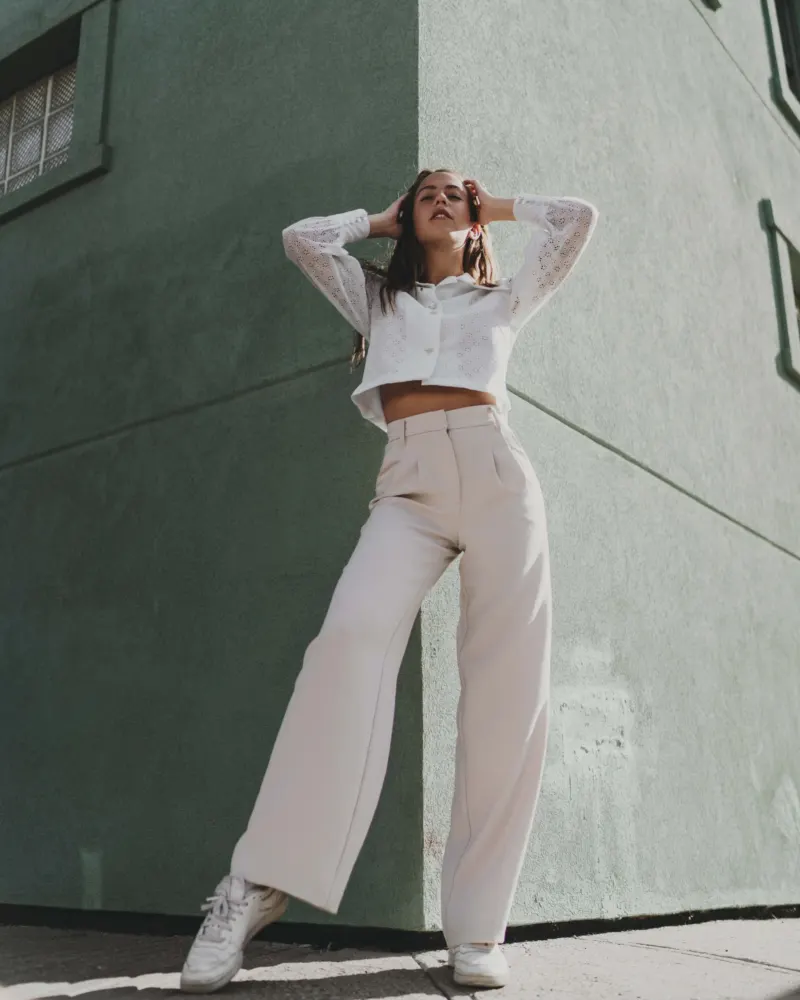
| Wide leg, full length | Only the toe shows, so a pointed or almond toe reads better than a very round one; a small heel or platform keeps the hem off the ground | Works if the sole has some thickness, so the shoe is not lost | Works easily; the weight of the shoe answers the width of the hem |
| Cropped and wide (culottes, cropped wide jeans) | Works easily in warm weather; a clear gap of ankle | Works easily; socks become visible and part of the outfit | Works with a boot tall enough to meet or pass the hem, so no strip of leg is caught between |
| Bootcut or flared | Largely covered; the trouser needs enough length to skim the floor at the heel | Works with some heel height; flat thin soles can let the hem drag | Works easily; this is the shape the cut is named for |
| Joggers or cuffed hems | Possible, though the gathered cuff can look heavy above a very slight shoe | Works easily | Works easily; the cuff sits on top of the shoe’s collar |
The hem does half the work
The fold of fabric where a full-length trouser rests on the shoe is commonly called the break. To our eye, more break looks traditional and relaxed; none at all, with the hem just touching the shoe, looks sharp; a hem that ends clear of the shoe looks cropped and puts the sock or ankle on show. All three are legitimate, and the same pair of trousers can be moved between them.
That is worth remembering before deciding a pair of shoes “does not go”. Turning a hem up once, rolling a jean twice, or having a trouser shortened by a centimetre or two often fixes a pairing that looked wrong. Re-stitching a hem is among the jobs that our guide to clothing repairs worth considering treats as within a beginner’s reach, and shortening is everyday work for an alterations tailor. If you wear both flats and heeled boots with the same wide trousers, the hem can only be right for one of them; choose the shoe you wear more, or roll for the other.
Four pairings in detail
Straight jeans and leather trainers
The baseline. A straight leg and a medium shoe are close in scale, so neither dominates and almost any top will sit above them.
- Pieces
- Mid-blue straight-leg jeans, white or off-white leather trainers, plain socks.
- Swaps
- Brown suede desert boots or derbies in autumn. Black jeans and black trainers for a longer unbroken line. Loafers when trainers are too casual.
- The detail
- Length. With the hem resting lightly on the laces the look is neat; one turn-up of about 3 cm shows the top of the shoe and a little sock, and looks more relaxed.
Tapered chinos and loafers
A narrowing leg ending at the ankle bone frames a low-cut shoe completely, so the shoe’s shape and colour matter more here than in any other pairing.
- Pieces
- Stone or olive tapered chinos, dark brown leather loafers, a shirt or polo.
- Swaps
- Navy wool trousers with the same loafers for the office. Ballet flats or slim leather sandals. Plain canvas plimsolls in summer.
- The detail
- What fills the gap. Bare ankle or invisible socks look summery; a fine sock in the trouser colour carries the trouser line down to the shoe; a sock in a contrasting colour turns the gap into a deliberate stripe.
Wide-leg trousers and a shoe with some sole
A wide hem covers most of the foot, so the shoe is felt mainly as height and as a toe. A little thickness underneath keeps the fabric clear of the pavement and stops the hem collapsing.
- Pieces
- Black or cream wide-leg trousers in a cloth with some weight, block-heeled ankle boots or thick-soled loafers, a fitted or tucked top.
- Swaps
- Chunky trainers for a casual version. Platform sandals in summer. A pointed flat if you prefer no height, with the hem taken up so it clears the ground.
- The detail
- Check from the side as well as the front. The hem should hang clear at the back of the heel; if it catches under the shoe as you walk, it is too long for that pair.
Cropped trousers and ankle boots
The pairing with the most ways to go slightly wrong, and the easiest to fix. The question is whether the boot and the hem meet.
- Pieces
- Cropped straight or wide trousers ending above the ankle, leather ankle boots with a shaft that fits closely to the leg.
- Swaps
- Taller boots that disappear under the hem in winter. Tights or socks in the colour of the boot to close the gap. In summer, the same trousers with sandals and the gap left open.
- The detail
- The strip of leg. Either let the hem overlap the boot, or leave a clear gap of several centimetres; a sliver of one centimetre looks accidental.
Socks, ankles and colour
Colour can join or separate the two halves. A shoe close in depth to the trouser, such as black boots with charcoal trousers or tan loafers with stone chinos, continues the leg down to the floor. A shoe much lighter or darker stops the eye at the hem, which draws attention to the feet; white trainers under dark trousers are the familiar example, and whether that emphasis is welcome is a matter of taste.
Socks belong to this join as well. Matching the sock to the trouser extends the trouser line; matching it to the shoe makes the shoe look taller, almost like a boot; choosing a third colour adds an accent in a place where a small amount goes a long way.
If your wide trousers are the pair you struggle with most, our article on different ways to balance wide-leg trousers deals with what happens above the waistband, and weekend outfits built around comfortable shoes starts from the footwear and works upwards.