Choosing an Everyday Bag Around What You Carry
Empty your bag on to a table, sort what you find, and let the size, weight and number of small things decide the shape, strap and pockets you need.
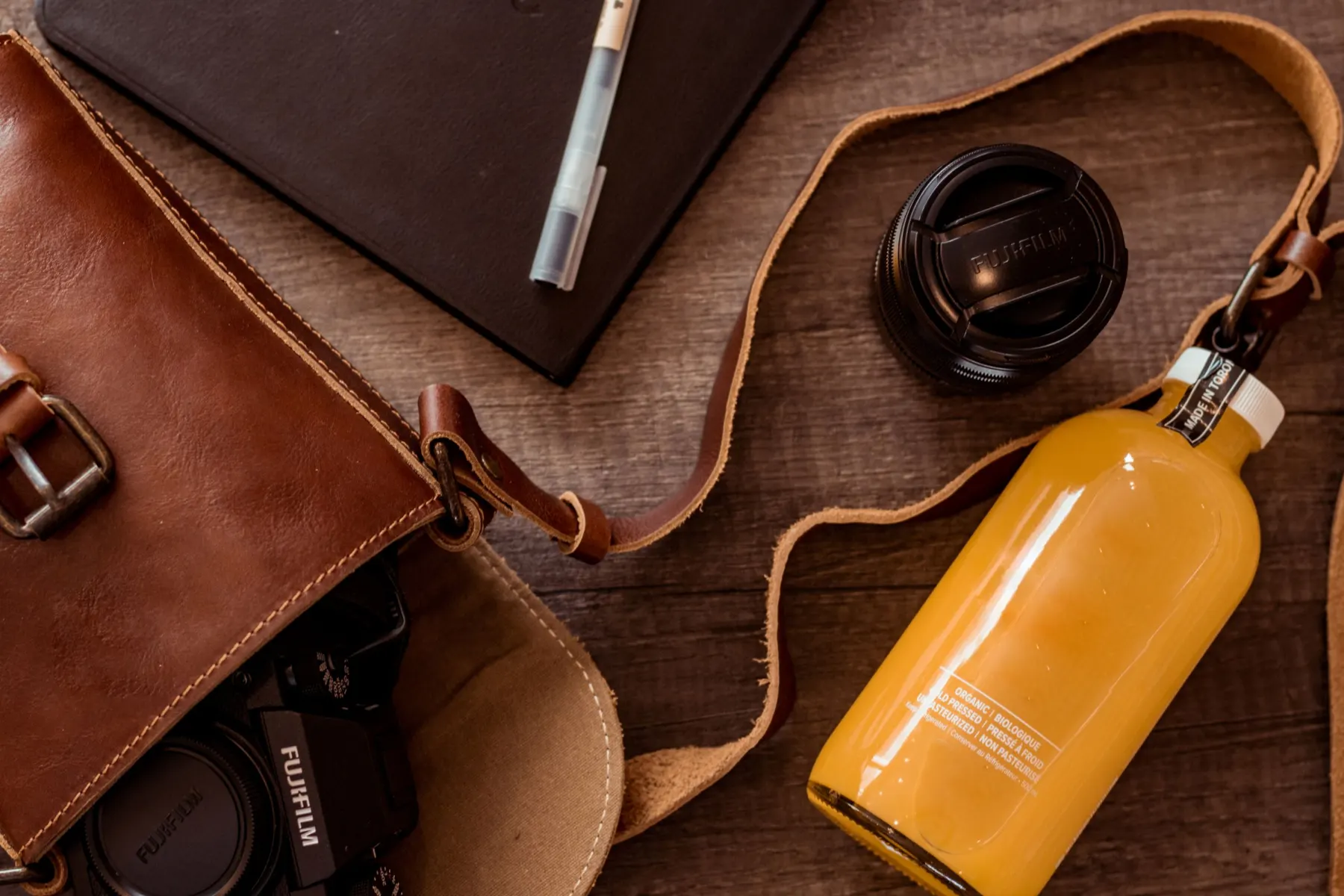
Tip your current bag out on to a table. All of it: the main compartment, the zipped pocket, the bottom corners where receipts go to dissolve. Then leave the bag to one side and look only at the heap, because the heap is the brief. A bag chosen from a shelf is chosen for how it looks empty; a bag chosen from the heap is chosen for the job it will do every day.
The exercise takes ten minutes and costs nothing, and quite often it ends with the bag you already own going back into use, with less in it.
Sort the heap into three piles
The first pile is what you used yesterday: keys, phone, cards, perhaps a water bottle, glasses, a laptop, a lunch box. The second is what you use some days and are glad to have: an umbrella, a charger, a notebook, a folded shopping bag, a spare layer. The third is everything that has simply been living there, from old tickets to the third lip balm.
Put the third pile away. What remains is your real load, and it is worth being honest about it. If the second pile is larger than the first, you are carrying for the day that might happen, which is a reasonable choice, but it is a choice about size and weight that you can now see.
Three measurements the heap gives you
The largest rigid object. A laptop, a tablet, an A4 folder or a tall bottle decides the minimum dimensions more than total volume does. A bag can hold a great deal and still refuse a 14-inch laptop by a centimetre. Measure that one object and treat its longest side as the number that matters.
The weight. Pick the piles up together, or stand on the bathroom scales with and without them. There is no correct figure; the point is to know whether you are choosing for the weight of a paperback or of a small dumb-bell. A light load can hang from a thin strap or a short handle all day. A heavy one is usually more comfortable on a wide strap, across the body, or on both shoulders.
The number of small things. Count the items you reach for without looking: keys, travel card, phone, earphones. Each one wants a known place. If there are more than three or four, pockets will matter to you more than they do to someone who carries a phone and a cardholder.
How the load is carried
Shapes are easier to compare by how they sit on the body than by their names.
In the hand or the crook of the arm. A top-handle bag or briefcase keeps a neat outline and stays off your clothes, so it does not rub knitwear or crease a jacket. It occupies a hand, which is tiresome with an umbrella, a coffee or a child’s hand to hold.
On one shoulder. A tote or shoulder bag is quick to get into and easy to put down. A deep open tote swallows a jumper, a lunch box and a laptop without complaint; it also lets everything settle in one layer at the bottom unless you add a pouch or two. Check that the handles are long enough to pass over a winter coat sleeve, which is where many otherwise good totes fail.
Across the body. A crossbody strap spreads the weight and leaves both hands free, which suits walking, cycling and public transport. The strap draws a diagonal line across whatever you are wearing, so it becomes part of the outfit: narrow and quiet in the same colour as the coat, or wide and contrasting if you like the line to show. Small crossbody bags hold the first pile and nothing else, which some people find freeing.
On both shoulders. A backpack is the most even way to carry a laptop and a bottle. A plain one in canvas, leather or matt nylon with few external straps sits comfortably with a coat or a blazer; a technical one with many toggles reads as sportswear, which is fine if the rest of the outfit agrees. The trade-off is access: everything is behind you.
At the waist or chest. A belt bag (fanny pack) carries the first pile only and keeps it in front of you. Worn across the chest it behaves like a very small crossbody.
Openings, pockets and what the bag weighs empty
How a bag opens changes daily life more than its colour does. A zip across the top keeps things in when the bag tips over on a train seat. A flap is slower but shields the contents from rain. A magnetic snap or open top is the fastest and the least secure. Think about where the bag usually goes down: a floor, a bike basket, a crowded bar.
Lift the bag empty. Thick leather, heavy hardware and chain straps can weigh a surprising amount before anything goes in, while canvas, nylon and unlined soft leather weigh little. If your heap was already heavy, the empty weight is part of the sum.
Inside, a pale lining makes things easier to find than a black one. One zipped pocket for valuables and one open slip pocket for the phone cover most needs; more than that and you start forgetting which pocket holds what. If a bag you like has no pockets, a couple of small pouches in different colours do the same job and move with you from bag to bag.
How it sits with your clothes
An everyday bag is seen with nearly everything you own, so it is worth holding it against the coat and the shoes you wear most rather than against a single outfit. It does not have to match either. A bag in the same family of depth as your shoes, such as mid-brown with tan, or black with charcoal, tends to look settled; a bag in a clear colour against neutral clothes becomes the point of interest, which is one of the gentler ways of adding colour to a mostly neutral wardrobe.
Surface matters too. Smooth leather next to a wool coat, canvas next to denim, or a woven straw bag with linen are all contrasts of texture, and the reasoning is the same as in any outfit; our piece on combining textures sets out the idea behind them: a surface shows up best next to something unlike it. Scale is a matter of taste. A large bag takes up more of the outfit and tends to make it look more casual; a small one looks neater and asks you to carry less.
One bag, or two with different jobs
If your first pile is small and your second pile is large, the neatest answer is often two containers: a small bag for the things that never leave you, and a plain tote or backpack for laptop days and shopping. The small bag drops inside the large one, and at lunch you take only the small one out.
Before deciding that you need anything new, try the bag you tipped out with only the first two piles in it, and with a pouch for the small things. Many bags that felt wrong were simply overfull. If there is still a real mismatch, say a laptop that does not fit or a strap that slips, write that single requirement down in the way described in our guide to identifying wardrobe gaps before shopping, and take the laptop with you when you look.