Hanging or Folding: How to Store Different Garments
Two questions decide it: does the fabric stretch under its own weight, and does it crease when folded? A garment-by-garment table with the reasons.

Most wardrobes are organised by what fits where: the rail is full, so the next thing goes on a shelf; the drawer is full, so the next thing goes on a hanger. Clothes are then shaped by that accident. A jumper develops points at the shoulders, a pair of trousers acquires a ridge across the thigh, a silk blouse comes out of a drawer needing ten minutes with an iron.
The decision is simpler than it looks, because it comes down to two properties of the garment. Does the fabric stretch under its own weight? Then it wants to lie flat. Does it crease when folded and have a shape built into the shoulders? Then it wants to hang. Everything below is those two questions applied to particular pieces, with reasons taken from textile conservation and university extension guidance where they exist and marked as our own where they do not.
The principle behind the rail and the shelf
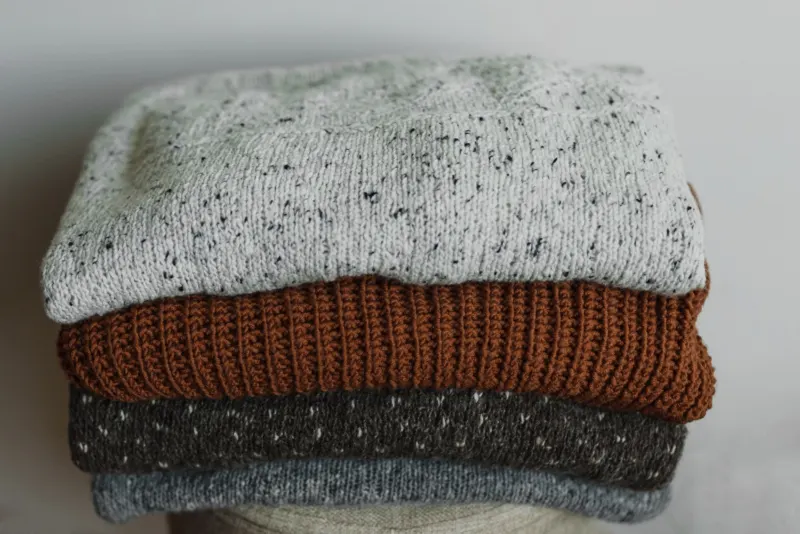
A hanger puts the weight of a garment on two narrow strips at the shoulders. A woven shirt or a tailored jacket generally copes with that, and a jacket is built to sit on shoulders. A knit is another matter. The University of Kentucky’s extension guide to clothing storage lists jumpers (sweaters) and other knitwear, including knitted dresses and jackets, together with heavy, stretchy clothing and delicate or fragile pieces, as items for flat storage. It names hanging as the main cause of stretching, sagging and bulges, and notes that the weight of a heavy, fragile or knitted garment left on a hanger for long periods can lead to strain and, eventually, broken threads and holes.
The Woolmark Company, the wool industry’s body, gives the same advice for storing wool clothes in one line: fold, don’t hang, to help garments keep their shape. Folding has its own cost, which is creasing, and the Kentucky guide is frank that slight creases are hard to avoid in anything stored flat. So the choice is always between two small risks, and the right answer depends on which one the garment is more vulnerable to.
Garment by garment
| Garment | Hang or fold | Why | How |
|---|---|---|---|
| Jumpers and cardigans | Fold | Knits stretch under their own weight on a hanger | Fold as few times as possible; heaviest at the bottom of the stack |
| Knitted dresses and jersey pieces that drop | Fold or lay flat | Same reason; length and neckline are the first things to grow | If one must hang, support its weight (see below) |
| T-shirts and sweatshirts | Fold | Knitted fabric; hanger marks at the shoulders | Fold or roll |
| Woven shirts and blouses | Hang | Stable cloth that creases when folded | A shaped hanger; fasten at least the top button |
| Tailored jackets, blazers and coats | Hang | Built-in shoulder shape needs support | A shaped or suit hanger wide enough for the shoulder; space on either side |
| Sheer or delicate blouses and dresses | Hang, if the shoulders are sound | Folding creases them; thin hangers mark them | A padded hanger |
| Tailored trousers | Hang | Keeps the crease line and avoids a fold mark | From the hem, or over a padded or rounded bar |
| Jeans and casual trousers | Either | Sturdy cloth, little to lose | Folded on a shelf or over a bar, as space allows |
| Skirts and dresses with hanging loops | Hang | The loops take the weight off the fabric | Hook the loops over the hanger |
| Bias-cut dresses and skirts | Fold or support | Cloth cut on the bias stretches when hung | Flat, or supported so the weight is shared |
| Beaded or heavily embellished pieces; anything with weak shoulder seams | Box or lay flat | The weight pulls on the seams | Flat in a box, folds padded with tissue |
| Underwear and socks | Roll or fold | Small, unhangable | Rolling saves space and reduces wrinkling |
The reasons in the knitwear, trouser, loop, bias and rolling rows come from the Kentucky extension guide; the hanger advice follows its guidance on hanger types; the row on beaded pieces and weak shoulder seams follows advice written for antique garments by North Carolina’s state historic sites. The T-shirt, woven shirt, tailored trouser and jeans rows are our own application of the same reasoning.
If it hangs: choosing and using the hanger
The Kentucky guide’s rule is that the hanger is chosen by the style and weight of the garment, and that support should never be so concentrated that the garment distorts.
- Thin tubular plastic hangers give minimal support. They are fine for firmly woven, lightweight shirts and blouses and not much else.
- Shaped and suit hangers are for jackets, suits and tailored garments. The hanger should reach the end of the shoulder and stop there; one that is too wide pushes into the sleeve head, and one that is too narrow lets the shoulder collapse over its end. That last sentence is our observation, not the guide’s, but it is easy to check in a mirror.
- Padded hangers are the Kentucky guide’s choice for sheer-fabric blouses. North Carolina’s historic sites guidance, written for antique garments, prefers them to wire or plastic because they give better support.
- Wire hangers are best avoided unless covered: they can rust, the paint can peel, and the metal can snag delicate fabric.
Trousers can be hung from the hem or cuff, or laid over a hanger bar that is padded or thick and slightly rounded, so that no sharp crease forms across the thigh. Skirts and dresses often have tape loops sewn in at the waist; they are there to carry the garment’s weight on the hanger and are worth using.
Two habits matter as much as the hanger. Leave space between neighbouring garments so that air can move and nothing is crushed, and fasten at least the top button or the zip so that the piece sits squarely and cannot slide off.
If it folds: making the creases harmless
- Fold along construction lines such as seams, or where the garment bends in wear, at the waist or the knee.
- Fold as few times as possible, and vary the fold from time to time. Prolonged creasing in exactly the same place can eventually break threads.
- Do not stack creasing fabrics if you can avoid it. When you must stack, put the largest and heaviest pieces at the bottom.
- Where a crease would matter, a sheet of white tissue paper inside the fold softens it.
- Line drawers and paint or cover bare wooden shelves. The Kentucky guide’s reasons are snags and the natural oil and acid of unfinished wood; the North Carolina guidance adds that acid in wood causes textiles in direct contact with it to yellow.
Rolling is an alternative the Kentucky guide suggests for small soft things such as underwear and socks: it can take less room and reduce wrinkling. The same idea turns up in suitcases, as in our guide to packing a small travel wardrobe.
The in-between cases
A knit you want to hang. If drawer space has run out, the aim is to stop the shoulders carrying the load. The Kentucky guide’s suggestion is a storage device that supports the item. A common home version is to fold the jumper in half lengthways and drape it over the bar of a hanger, body on one side and sleeves on the other, so the weight rests on the bar. It is a compromise, and worth checking after a few weeks; if the fabric is growing, back to the shelf it goes.
Something worn once and not ready for the wash. The same guide recommends letting clothes air at least overnight before they go back into a wardrobe or drawer, so that moisture can evaporate and wrinkles relax, and giving each garment and pair of shoes at least a day’s rest between wears. A hook or a chair back will do for one night, in our view. It is not a home: the same guide says hooks have limited use as hanging devices and should generally be avoided.
Dry-cleaning bags. Take the plastic off before the garment goes on the rail. The Kentucky guide advises against leaving plastic bags over clothes because they trap moisture, and the North Carolina guidance says plastic dry-cleaning bags can create conditions suited to mould. The Kentucky guide’s alternative for hanging clothes is a cloth garment bag.
What changes when clothes are put away for months
Day-to-day storage and seasonal storage are not the same problem. Over months, the small risks grow: a hanger has longer to stretch a shoulder, a fold has longer to set, and anything left with a trace of food or body oil has longer to cause trouble. The Kentucky guide’s summary is that many items stored for long periods are best stored flat, and that nothing should be put away damp.
Reorganising the rail often turns up pieces you had forgotten you owned, which makes it a natural lead-in to a practical wardrobe audit. Putting clothes away for months is a subject of its own, taken week by week in our guide to preparing seasonal clothes for storage.
Sources
- University of Kentucky Cooperative Extension Service Clothing Storage (CT-LMH.144, revised 01/02)
- The Woolmark Company How to store wool clothes
- NC Historic Sites (North Carolina Division of State Historic Sites and Properties) Caring for Your Textiles