How to Shop Second-Hand with a Clear Plan
Measurements instead of size labels, a two-minute inspection, an honest view of alterations, and what to do with a find before it goes in the wardrobe.
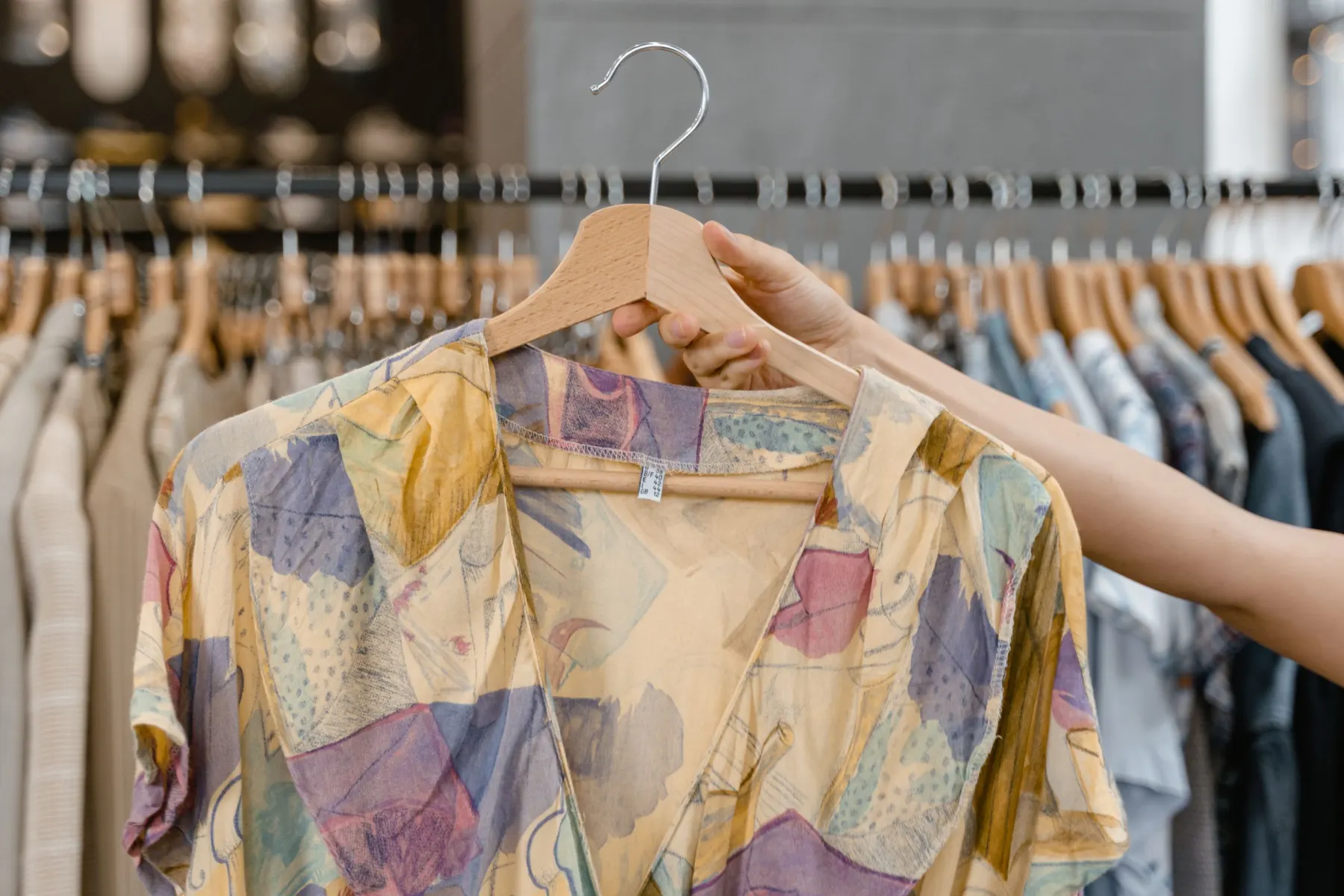
A second-hand rail has one of everything. There is no size run to work through, no second colour in the stockroom and usually no returns desk, and the label inside may have been printed decades ago in a sizing system that no longer means what it says. Almost everything that makes ordinary shopping forgiving is missing. What you get in exchange is variety, and garments that have already shown how they survive washing and wear.
Shopping this way goes best in a fixed order: prepare at home, sort quickly at the rail, inspect slowly, try on, and deal with the garment properly before it joins your wardrobe.
At home: write the description and take the measurements
Go with a short list of specific things — two or three at most — each written as a description. “Grey wool trousers, straight leg, to wear with the navy jumper and brown boots” can be checked against a rail. “Something nice” cannot. If you have not yet worked out what is actually missing, identifying the gaps in your wardrobe comes first.
Then measure garments you already own that fit as you like, laid flat: for a jacket or shirt, shoulder seam to shoulder seam, armpit to armpit, sleeve from shoulder seam to cuff, and back length; for trousers, waistband laid flat, rise, thigh and inside leg. Write the numbers in your phone and put a tape measure in your bag.
This matters because size labels are not a stable guide across time. A history of American women’s sizing published by Time describes a 1958 size standard, drawn up with the National Bureau of Standards, as largely arbitrary; recounts how clothes came to be marked with lower numbers, the practice known as vanity sizing; and notes that in 1983 the US Department of Commerce withdrew its commercial standard for women’s clothing sizes altogether. That is one country and one half of the rail, but it is reason enough to expect the number on an older piece to fit differently from the same number today. Measurements are the more dependable common language.
At the rail: hands first, then eyes
You cannot read every label in a charity shop or vintage stall, so do not try. Walk the rail with one hand running along the sleeves or legs and stop when the cloth feels good: dense, smooth, substantial for its type. Then look at the colour. Only then pull the hanger out.
Check the fibre label if there is one; on older and handmade pieces there may be none. Check the care label as well. A beautiful jacket marked dry-clean only is a fine thing to own if you will actually take it to a cleaner, and a burden if you will not. Our guide to reading a clothing care label covers the symbols.
Look beyond your usual section. Cuts and size labels vary between decades and between makers, so a jacket from any part of the shop may match your measurements. The tape measure does not know which rail a garment came from.
The slow inspection
Take the candidate to the best light in the shop — the window, if possible — and go over it methodically. Second-hand faults cluster in predictable places, and two minutes now saves a disappointing discovery at home.
With wool, cashmere, fur or feather-filled pieces, add a check for moth. English Heritage’s guidance on preventing and controlling clothes moths says the moths love wool, particularly high-quality items such as cashmere, and will also eat fur, feathers and untanned skins. Damage, it notes, is usually in dark and hidden areas: in crevices and creases, under collars, behind lapels, in pockets and turn-ups, and wherever a garment has been folded. Turn the collar up, open the lapels, turn out the pockets and look for small holes, silky webbing or tiny cases.
The same guidance points out that textiles soiled with food are attacked in preference to clean ones, so a stained area may be more damaged than the cloth beside it. An old mark on a wool garment is worth a closer look for that reason alone.
In the fitting room: what can be changed and what cannot
Try everything on if the seller allows it, and measure if not. Move as you would in daily life: sit, reach, raise your arms. Because there is no other size to try, the question is never “which size?” but “can this garment be made right, and is it worth it?”
Altering Ready-to-Wear, a University of Minnesota extension bulletin, offers three useful rules of thumb. It is easier to take a garment in than to let it out. If a garment is more than one size too large or too small, alterations become impractical. And the hardest places to alter are the neckline, chest, bust, underarm and crotch. In other words, look for pieces that fit through the shoulders, chest and rise and are slightly generous elsewhere.
For jackets in particular, the sequence in what to check when trying on a blazer — collar, shoulders, chest, then everything below — is the one to follow. Vintage tailoring is one of the real pleasures of second-hand shopping, and it is also where an ill-fitting shoulder is most tempting to overlook.
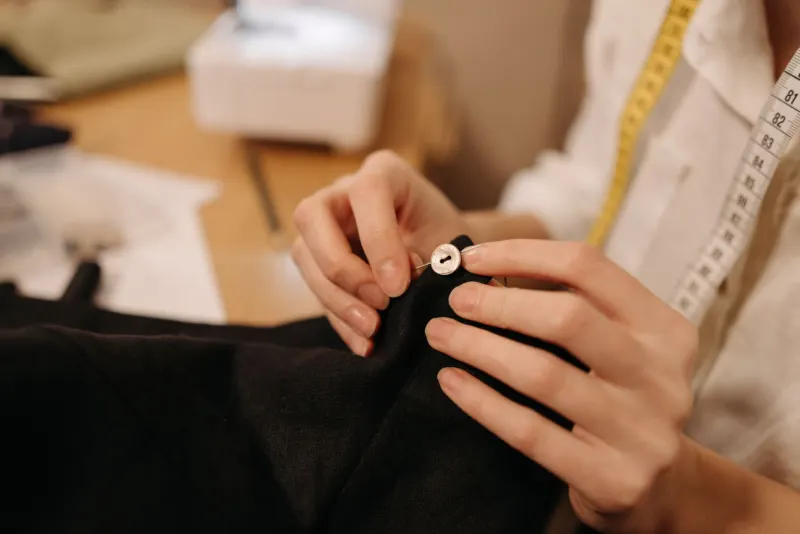
Smaller faults are often easy to put right: a missing button, a dropped hem, a seam that has come unstitched along its original line. Holes in the body of the cloth, a perished lining throughout, or underarm damage are bigger undertakings. If you are unsure, clothing repairs worth considering sorts the common jobs by difficulty, and a tailor can usually tell at a glance.
The last question before paying
Hold the garment against the description you wrote at home. Does it do the job, and go with the pieces you named? A wonderful coat that answers none of your sentences is still a wonderful coat, and you may decide to take it — but do so knowing it is an addition, not a solution, and that it will need partners of its own.
Count the work honestly as well. A piece that needs cleaning, a new zip and the sleeves shortened is three errands. If you would do them this month, it is a good find. If it would go into a bag in the hallway, leave it on the rail for someone who will.
At home: clean it before it goes in the wardrobe
Do not hang a second-hand garment straight in with your other clothes. Wash or clean it first, following its care label; where there is no label, treat the piece as delicate and consider asking a professional cleaner, particularly for tailoring, silk and anything with structure.
Once it is clean, do the repairs straight away, while you still remember what they were. Then wear it within the week, with the pieces you had in mind when you wrote the description. A second-hand find proves itself the same way as any other garment: by turning up in what you actually wear.
Sources
- Time The Bizarre History of Women's Clothing Sizes (Laura Stampler, 23 October 2014)
- English Heritage Clothes moths - prevention and control
- English Heritage Understanding Clothes Moth Infestations | English Heritage
- University of Minnesota, Agricultural Extension Service Altering Ready-to-Wear (Extension Bulletin 454), by Lois Goering, 1980