Finding a White Shirt That Works for Your Routine
Poplin, oxford or twill; ironed or not; tucked or loose. How laundry habits, layering and opacity decide which white shirt you will actually wear.

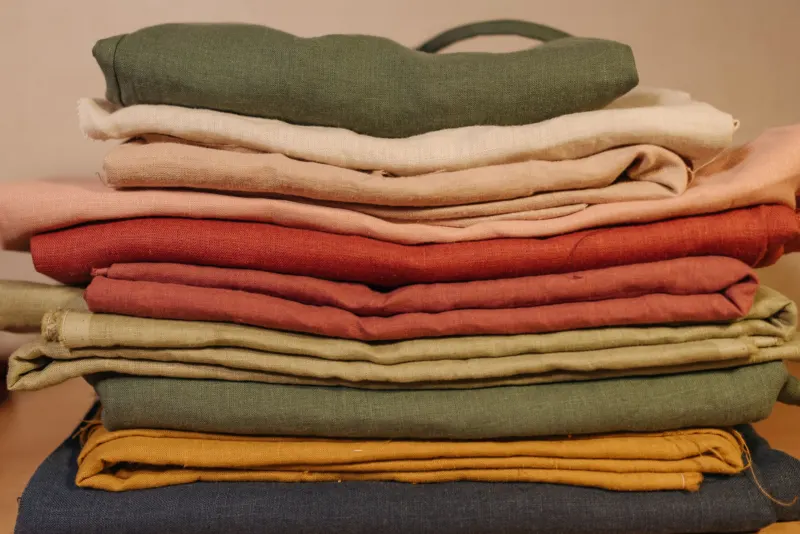
“White shirt” is a description of a colour and a rough shape; it does not say what the thing is made of, how it is cut or how it behaves. A crisp poplin with a stiff collar, a soft oxford with a button-down collar and a loose linen shirt are three different garments that happen to share a name. Which of them works for you depends less on your wardrobe than on your week: how you wash, whether you iron, what you wear over it and where you take it.
So this guide runs through the shirt by way of routine. If you already own a white shirt you rarely wear, the same questions will usually show why.
Three cloths that share one name
Three constructions turn up again and again in white shirts, and the difference between them is in how the threads cross. The descriptions of the weaves below follow the Textile Research Lab at Pratt Institute and Cotton Incorporated’s CottonWorks; the final column is our own judgement about how each tends to be worn.
| Cloth | How it is woven | How it tends to wear |
|---|---|---|
| Poplin, broadcloth | Plain weave: warp and weft threads cross over and under each other alternately — the simplest woven structure | Smooth, flat and light; takes a sharp press and shows every crease; the thinnest of the three |
| Oxford | A basket-type weave in which two warp threads work as one, usually with a finer warp and a heavier weft | Visible texture, more body, softer with washing; sits happily with jeans and knitwear |
| Twill | Each weft thread passes over several warp threads, producing fine diagonal ridges | A slightly denser hand and a faint diagonal sheen; drapes rather than standing away from the body |
CottonWorks notes that plain-weave fabrics tend to be stiffer, with less drape, while basket constructions have more texture and better drape, and it describes oxford as a common construction for shirting. Pinpoint oxford, it adds, uses yarns of the same size in both directions; to our eye it sits between oxford and poplin in smoothness.
You can tell them apart without a label. Hold the cloth near a window: poplin looks uniformly flat, oxford shows a tiny chequered grain, twill shows diagonal lines when you tilt it.
Start with how you do the laundry
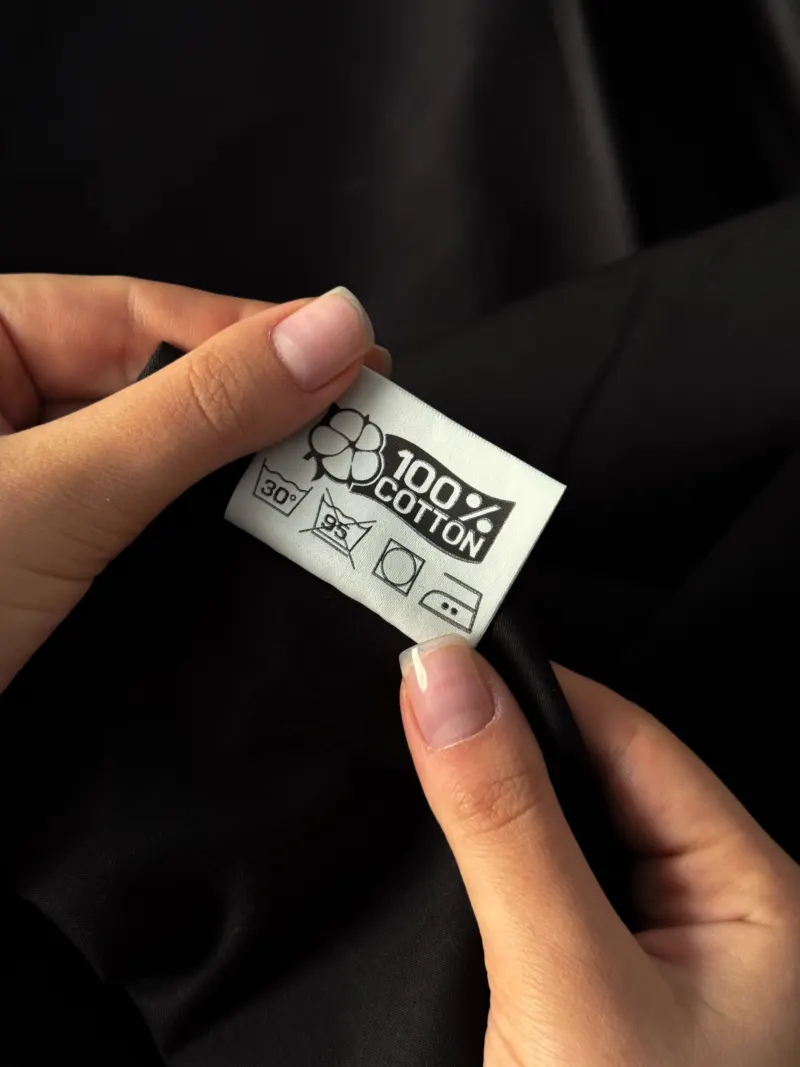
A white shirt is washed often, so its relationship with your washing routine decides whether it comes out of the wardrobe. The University of Georgia Extension’s fibre guide is blunt about the main candidates: cotton wrinkles unless treated; linen wrinkles badly unless treated; polyester is wrinkle-resistant but absorbs body oils.
That gives three honest options. If you iron, or do not mind doing so, untreated cotton poplin gives the cleanest result. If you would rather not, there are two routes: a cloth where rumpling looks intended — oxford, washed cotton, linen — or a shirt with an easy-care finish or some polyester in the blend, accepting the trade-off that guide mentions. We would add a third: be realistic. A shirt that needs twenty minutes with an iron in a house where nobody irons is a shirt that will not be worn.
If you are weighing up fibres more generally, our guide to cotton, linen and viscose compares how each behaves in everyday garments.
How sheer is it, and what goes underneath?
White cloth lets light through, some much more than others. To judge it, put your hand flat inside a single layer of the body of the shirt — not the front placket or collar, where the fabric is doubled — and look at it in daylight. If you can see the outline of your fingers clearly, you will see whatever is underneath.
That is not a defect; it only needs a decision. Some people like a visible vest or camisole as part of the look. Others want nothing to show, in which case a heavier oxford or twill is the simpler choice, or an underlayer close to your own skin tone; it is worth comparing one with a white underlayer in daylight to see which shows less. Chest pockets, a back yoke and a doubled placket all add opacity where they sit.
Collar, cuff and hem follow from how you wear it
Think about where this shirt will spend its time. Under a jumper (sweater), the collar is nearly all anyone sees. A button-down collar stays in place inside a crew neck; a soft unbuttoned collar may slide under or sit up unevenly, which can look relaxed or untidy depending on your tolerance. Under a blazer, a collar with enough height to rise above the jacket collar at the back keeps the neck looking finished. Worn open over a T-shirt, the collar matters least and the cloth matters most.
Cuffs come down to whether you roll your sleeves. A plain barrel cuff with one button rolls neatly twice and stays there. Stiff, deep cuffs resist rolling. If your sleeves are pushed up by ten every morning, a softer cuff and a sleeve cut with a little width will suit the habit.
The hem tells you whether the shirt was designed to be tucked in. A long, curved shirt-tail stays put inside a waistband and looks unfinished hanging loose over narrow trousers. A shorter, straighter hem sits well untucked and may pull free when tucked. If you do both, a moderate curve that ends around the hip is the compromise, and a half-tuck at the front is always available.
Fit checks that take two minutes
Button the shirt fully and look at the shoulder seam: on a conventionally cut shirt it sits about where your shoulder ends, while oversized cuts drop it down the arm on purpose. Then sit down. Sitting puts a shirt front under strain, and the place to look is between the buttons at the chest and stomach. If the placket pulls into gaps, try the next size or a different cut; a shirt that fits everywhere else and gapes between two buttons can sometimes be rescued with a small press stud sewn inside the placket, a job for a tailor or a patient evening.
Reach both arms forward as if typing or holding handlebars. The cuffs will ride up a little; what you are checking is whether the back pulls tight and whether the tails come out of your waistband. Finally, raise your arms above your head once. Everything will move — the question is whether it settles back when you lower them.
One shirt or two
Because white shows everything and is washed constantly, a single white shirt in regular use is always either on your back or in the laundry. Two is a practical number for anyone who wears one more than once a week. They need not be the same: a pressed poplin for the days that ask for it and an oxford or linen one for the days that do not cover far more ground than a pair of identical shirts.
If the shirt is mainly for work, think of it as one of the tops in a small set that all go with the same trousers and layers; building a small work wardrobe shows how that multiplies. And if you want to see where a shirt sits outside the office, our smart-casual guide — written about menswear, though the logic is general — builds two of its four outfits on one and offers a white shirt as a swap.
Collars and cuffs are the places to watch on a white shirt: a grey line inside the neckband, fraying at the fold. Looking at those two places when you hang the shirt up is the simplest way to know when it needs a more careful wash, and when it has moved from the pressed pile to the weekend one.
Sources
- Pratt Institute, Textile Research Lab TRL - Wovens
- Cotton Incorporated (CottonWorks) Basic Woven Fabric Designs | CottonWorks™
- University of Georgia Extension Understand Your Fibers | Textiles