How to Create an Outfit Mood Board You Will Actually Use
Twelve images, at least half of them your own clothes, each with a caption you can act on. A method, and one finished board described tile by tile.
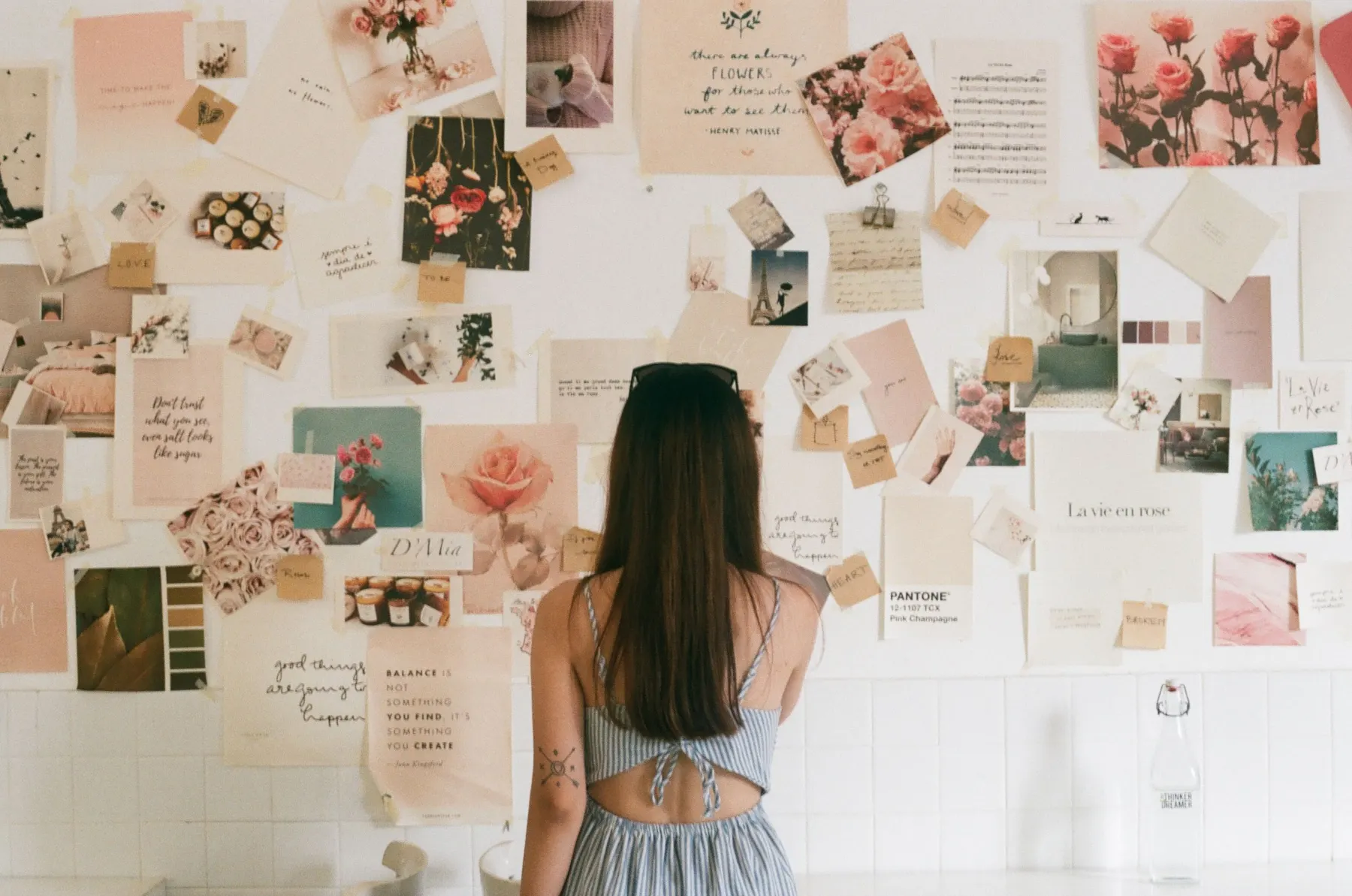
Most mood boards fail in the same way: they are lovely to look at and they change nothing about Tuesday morning. A hundred saved pictures of other people in other climates, with other budgets and other lives, add up to a mood and not to an outfit.
A board that gets used is smaller and plainer. It is made mostly of your own clothes, it fits on one screen, and every picture on it has a reason written underneath. This is how to make one, followed by a finished example described tile by tile.
Three limits to set before you collect anything
Twelve images at most. The number is arbitrary, but a limit matters. A board you can take in at a glance can be compared with what you are wearing; a board you have to scroll cannot.
At least half must be your own clothes. Photographs of outfits you have worn, or of garments you own laid flat. Outside images are welcome, but as a minority. They are there to point a direction, and your own clothes are there to show the way from here.
One board for one part of life. “Work, October to March” or “weekends in warm weather” is a board. “My style” is too large to be useful. Start with whichever part of the week is hardest to dress for.
Where the board lives
Anywhere you will see it while getting dressed. An album on your phone works, as does a single page in a notes app with pictures pasted in, or prints fixed inside the wardrobe door. Paper has one advantage: it is visible without picking up a phone. A phone album has another: it is easy to swap one picture for a better one.
Whichever you choose, it must allow captions. The caption is what turns a picture into an instruction.
What goes on it, in order
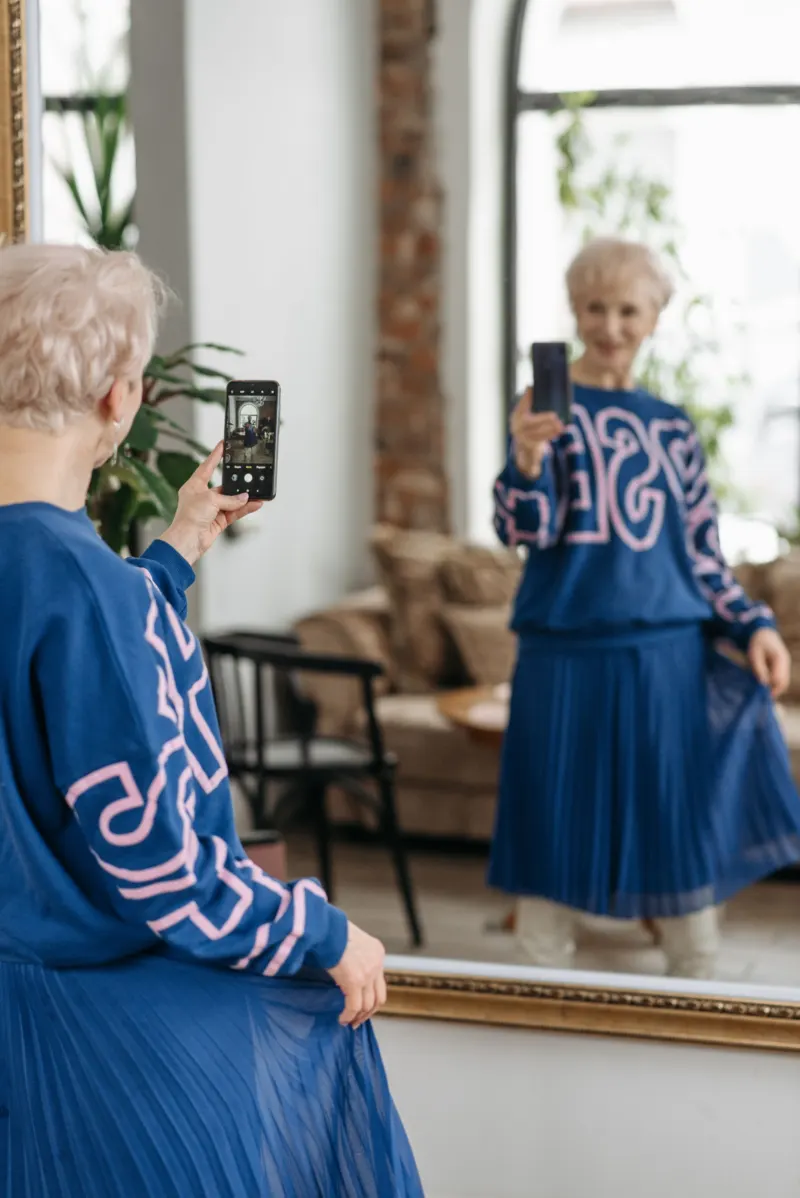
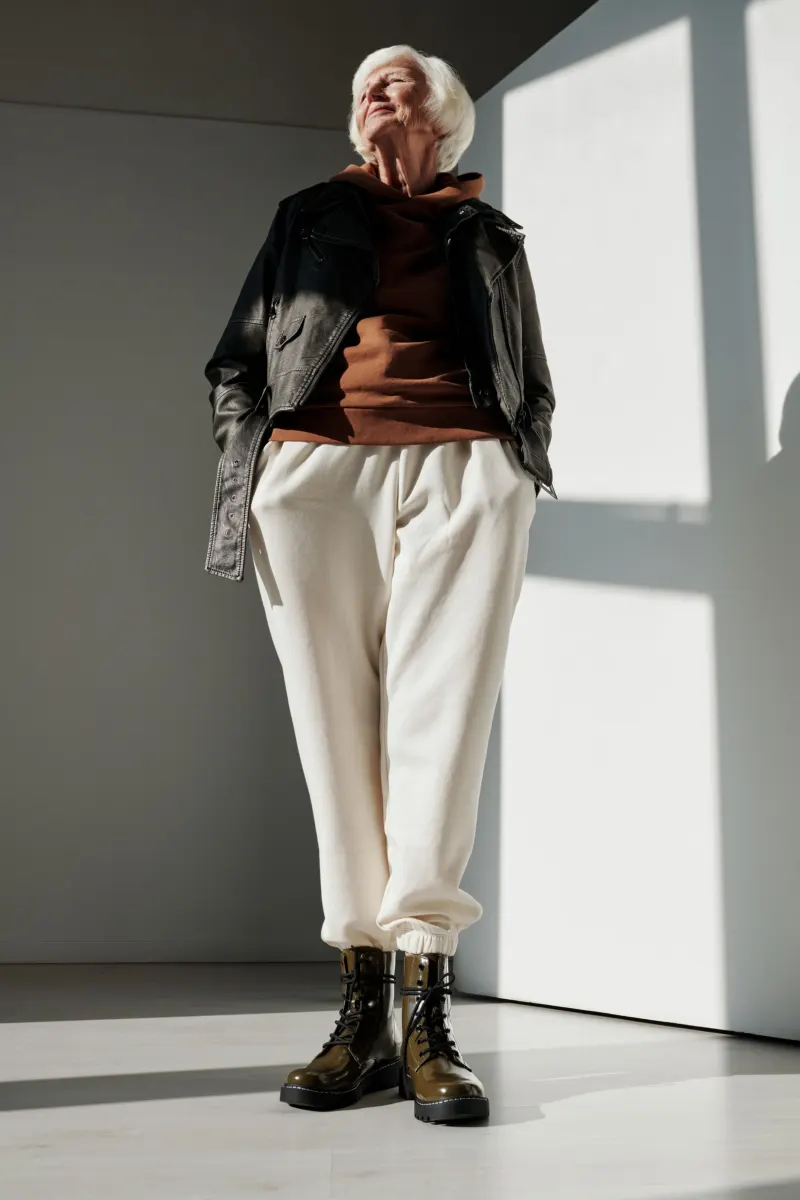
- Three or four of your own outfits that worked. Full length, shoes included. If you have none, spend a week taking them first; a simple set-up for outfit photos is enough.
- Two or three close crops of details you like on yourself. A cuff rolled twice, the way a particular collar sits over a jumper, a trouser hem meeting a shoe. Crop them out of the outfit photos.
- A colour strip. Photograph four or five of your garments stacked or folded side by side in daylight, so the picture shows bands of colour. This is your palette, taken from life.
- One texture picture. A close-up of a fabric you want more of in your outfits, such as corduroy, heavy linen or brushed wool, taken from your own wardrobe if possible.
- Two or three outside images. A film still, a painting, an old family photograph, a stranger’s coat seen in a picture. Choose them for one nameable thing and write that thing down. If you cannot say what you want from the image, leave it off.
For every tile, write a caption of ten words or fewer that begins with a noun: “length of the jacket”, “rust against navy”, “sleeves pushed up”. Captions that begin with a feeling (“so cosy”) are pleasant and hard to act on.
A finished board, described
This is an invented example for someone whose board is called “Work, cold months”. Twelve places, eight of them filled from the person’s own wardrobe, three with outside images and one left open.
- Own outfit: charcoal trousers, cream roll-neck, navy blazer, black loafers. Caption: blazer open, knit fills the neckline.
- Own outfit: dark jeans, pale blue shirt, grey crew-neck jumper, brown boots. Caption: shirt hem showing below the jumper.
- Own outfit: black midi skirt, black fine knit, long camel coat, ankle boots. Caption: one colour inside, coat as the contrast.
- Own outfit: olive chinos, white T-shirt, navy overshirt, white trainers. Caption: overshirt worn as a jacket on quiet days.
- Crop from tile 2: the shirt cuff folded back over the jumper sleeve. Caption: cuff over the knit.
- Crop from tile 1: the trouser hem resting on the loafer. Caption: hem just touching the shoe.
- Colour strip: folded navy, charcoal, cream, pale blue and camel garments. Caption: the palette, five colours, all already owned.
- Texture: close-up of the camel coat’s wool. Caption: something brushed in every outfit.
- Outside image: a film still of a figure in a long dark coat and pale scarf. Caption: scarf lighter than the coat.
- Outside image: a painting with a small area of rust red in a blue-grey scene. Caption: rust as the one warm note.
- Outside image: an old photograph of a relative in a waistcoat (vest) and rolled sleeves. Caption: waistcoat without a jacket.
- Left empty. Caption: for the next outfit that works.
Read as a whole, the board says something specific. The colours are dark and cool with cream, pale blue and camel as the light end. Layers are worn open. There is one soft, brushed surface each time. And there are three ideas not yet tried: a pale scarf, a note of rust, a waistcoat on its own.
Turning the board into a Tuesday
The board earns its place when you are standing in front of the wardrobe with ten minutes. Pick one own-outfit tile as a base and add exactly one caption from elsewhere on the board.
Tile 2 plus the caption from tile 10
A known outfit with one borrowed idea: “rust as the one warm note”.
- Pieces
- Dark jeans, pale blue shirt, grey crew-neck jumper, brown boots, and a rust-coloured scarf or a pair of rust socks.
- Swaps
- No rust in the wardrobe: a tan belt or a burgundy scarf moves in the same direction. Too warm for a scarf: let the socks carry it. Smarter day: the navy blazer from tile 1 over the jumper.
- The detail
- Keep the warm colour to a single place. The caption says “one warm note”, and two notes would be a different idea.
Photograph the result. If it works, it goes into the empty twelfth tile. If it does not, the outside image comes off the board and something else has a turn. Either way the board has done its job, which is to produce a decision.
Swap, do not add
Once the twelve places are full, a new picture can only come in by replacing an old one. This keeps the board honest: outside images that have never led to an outfit are the first to go, and over a few months the share of your own clothes rises.
When the season or the job changes, do not edit the old board into the new one. Start again with an empty album and the same three limits, and carry across only the tiles that still describe how you dress. The colour strip in particular is worth retaking, since it is also a quick map of where the wardrobe is thin, a subject covered in identifying the gaps in your wardrobe before shopping.