Finding Your Style Through Outfits You Already Like
Start with five outfits you forgot you were wearing, read them for shape, colour, surface and level, and turn what repeats into one usable sentence.
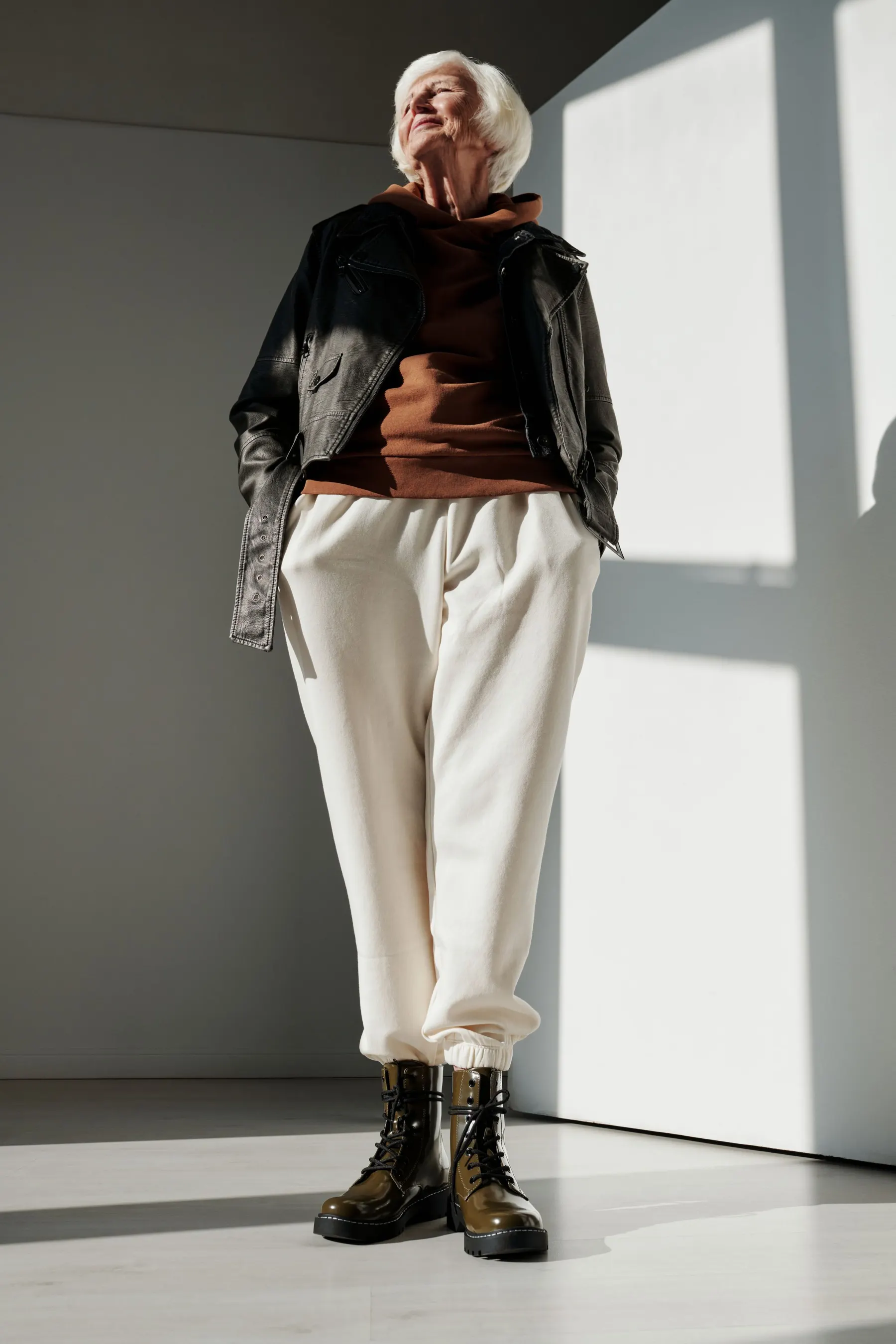
What were you wearing the last time you got dressed and did not think about your clothes again all day? Not the outfit that drew a compliment, and not the one you would choose for a photograph, but the one you forgot about because nothing needed adjusting and nothing felt like a costume.
That outfit is better evidence of your style than any list of adjectives. The method below starts with five such outfits and works backwards to a description you can use. It needs about half an hour, your wardrobe and somewhere to write.
Collect five outfits, not five garments
A favourite garment tells you little on its own, because the same grey jumper can sit inside very different outfits. Whole outfits carry the information: what went with what, how long, how loose, how dressed-up.
Find five. Scroll back through the photos on your phone for days when you happened to be photographed and liked how you were dressed. Think of what you put on when you are in a hurry and it matters. Include one from a warm month and one from a cold one, and at least one from the part of life that takes most of your week, such as work, study or looking after children.
Write each outfit down in full, shoes and outer layer included, or lay it out on the bed and photograph it. If you can only reach three, begin with three. If you want a larger pool to draw from, the fourteen-day log in building a wardrobe around the clothes you actually wear will supply one.
Read each outfit along four lines
For every outfit, answer the same four questions in a few plain words. Avoid style labels such as “classic” or “minimal”; describe what is physically there.
- Shape. Where is the outfit loose and where is it close? Where do the top layer and the trousers or skirt end?
- Colour. How many colours are there, how dark are they, and is there one that stands apart from the rest?
- Surface. Are the fabrics matt or shiny, smooth or rough, crisp or soft?
- Level. If a tracksuit is one and a suit is ten, where does the outfit sit? Which single piece is doing most to set that level?
Here is one outfit read in this way. It is an invented example, not a recommendation.
A hypothetical “forgot about it all day” outfit
The kind of combination that turns up in many wardrobes without having been planned.
- Pieces
- A navy crew-neck jumper over a white T-shirt, straight-leg dark jeans, brown leather boots, a mid-length grey wool coat.
- Swaps
- In the reading that follows, the garments could change entirely and the description would still hold: a loose knit over a close layer, a straight lower half, dark cool colours with one warm brown.
- The detail
- The edge of white at the neck and hem. It is the only light note in the outfit, and it is small.
Shape: easy on top, straight below, nothing tight, nothing oversized. Colour: three dark or mid tones and one warm accent in the boots. Surface: matt throughout, with wool, denim and leather that has lost its shine. Level: about five, set mostly by the coat.
Look for what repeats, then for the odd one out
Put the five readings side by side and underline anything that appears three times or more. People are often surprised by what turns up. It may be a length (“every top ends at the hip”), a habit of colour (“always one warm thing among cool ones”), a surface (“no shine anywhere”) or a level (“never above six, even for dinner”).
Then look at the outfit that fits least. It is not a mistake. It often marks the edge of your style: the place where you were dressing for someone else’s expectations, or the direction you would like to move in but have only tried once. Ask which of the two it was. If you felt good in it, note what was different about it, because that difference is worth trying again in a smaller dose.
It also helps to list two or three things that are absent from all five. If no outfit has a pattern, a heel, a hood or a bright colour, that is information as well, and it explains some of the unworn things on the rail.
Write it as one sentence
Turn the underlined words into a single sentence built from the four lines. For the example above it might be: relaxed straight shapes, dark cool colours with one warm note, matt fabrics, comfortably in the middle between casual and smart.
A sentence like this is more useful than three adjectives because it can be checked against a real garment. “Elegant” will not tell you why a shiny, fitted, bright-red shirt keeps going back on its hanger. “Matt, relaxed, dark with one warm note” does. Keep the sentence where you will see it, for instance as a note on your phone or on paper inside the wardrobe door.
Test the sentence for a week
For seven days, dress as you normally would and give each outfit a quick mark in the evening: did it match the sentence, and how did it feel? A photograph each morning makes this easier, and taking useful outfit photos for your own reference explains a set-up that takes less than a minute.
Two results are interesting. An outfit that matched the sentence and felt wrong means the sentence is missing something, often to do with comfort or with the occasion. An outfit that broke the sentence and felt right means the sentence is too narrow. Rewrite it at the end of the week. Most people change one clause.
Let the description change
A style sentence is a description of the present, not a rule for the future. Jobs change, climates change, and so does what feels like you. Repeating the exercise once or twice a year, with five new outfits, shows the drift more honestly than memory does.
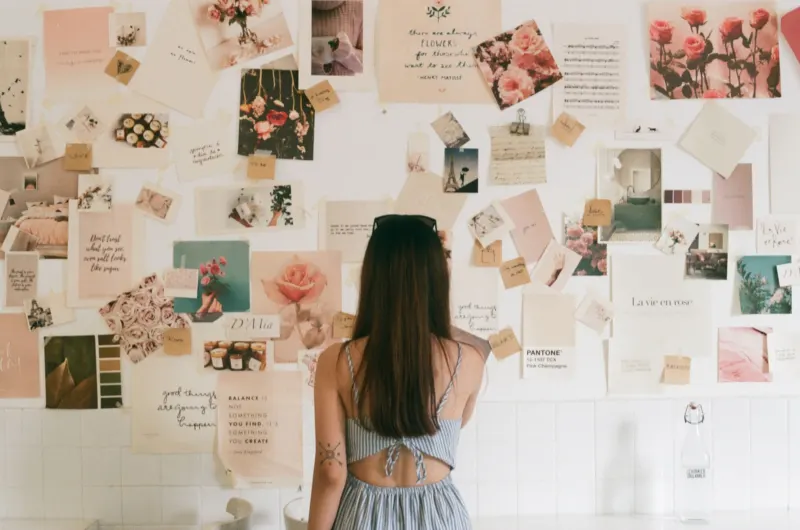
If you would like to steer that drift rather than only record it, pictures help. A small board that mixes your five outfits with one or two outside images you keep returning to is described in how to create an outfit mood board you will actually use, and the sentence you have just written makes a good caption for it.