Dressing for Dinner Without Starting from Scratch
Start from what you wore today. Which piece to keep, which one to change, and four dinner outfits built from jeans, office clothes, a day dress or chinos.
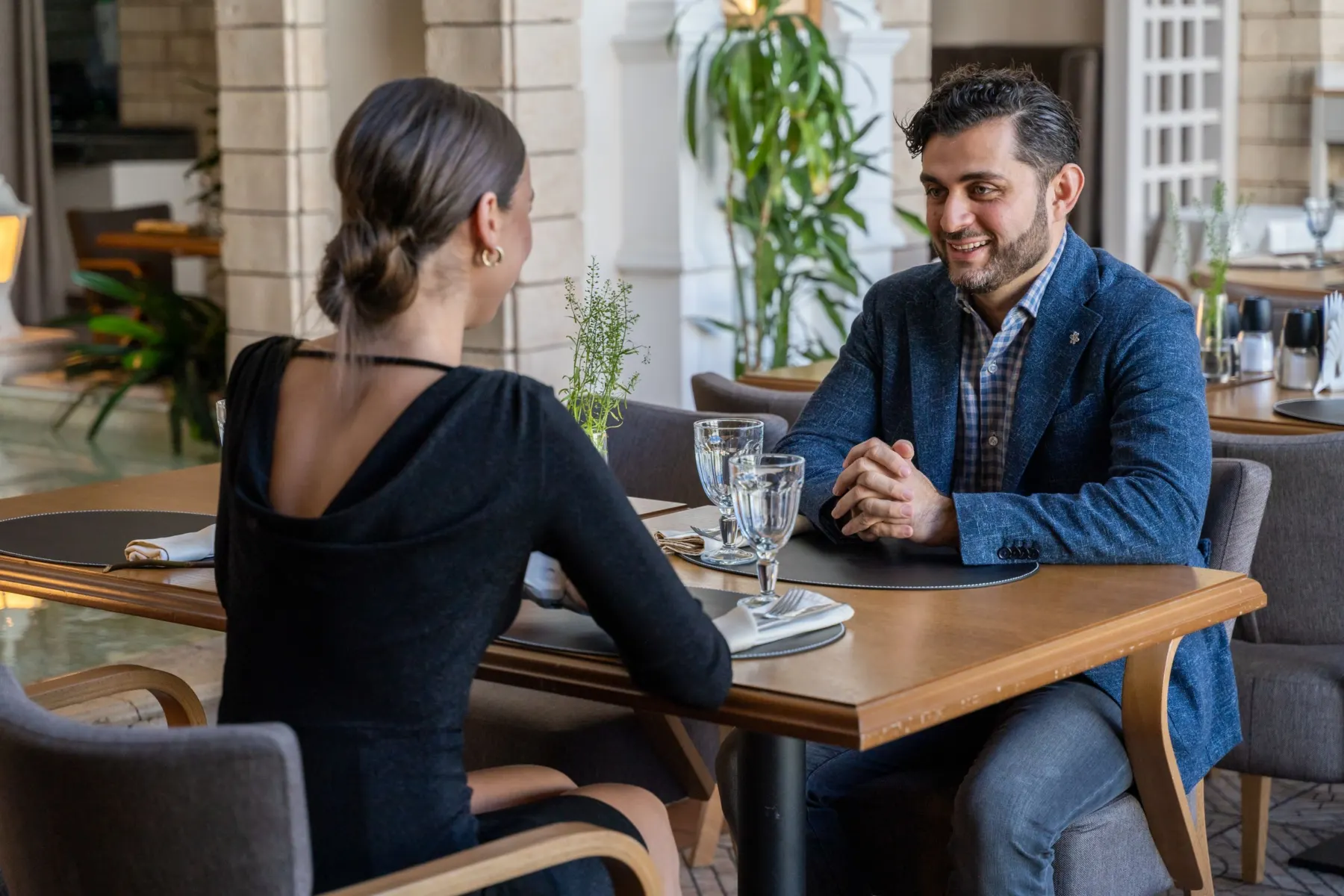
It is a quarter past six. The table is booked for half past seven, somewhere with tablecloths but no stated dress code, and you are standing in the bedroom in the jeans and jumper you have had on since morning. The instinct is to take everything off and begin again.
There is usually no need. Most daytime outfits are one or two changes away from a dinner outfit, and working out which one or two is faster than starting from an empty floor. The method here is to keep the piece that is already working, replace the piece that says “daytime” most loudly, and then attend to the area that will actually be seen across a table.
What makes clothes read as evening
None of this is fixed, but a few shifts reliably move an outfit from day towards night. Darker or deeper colours. Smoother or richer surfaces, such as a fine knit in place of a sweatshirt, or leather shoes in place of canvas. Less to carry: a small bag, or pockets only. And a clearer neckline, because at dinner you are seen mostly from the chest up.
You rarely need all four. One change of surface and one change at the neck is often enough. If the invitation left you guessing how formal the place is, our piece on reading a dress code when the invitation is vague suggests what to look for before you decide.
If you spent the day in jeans and a jumper
Keep the jeans, provided they are dark and in good order. To our eye, dark denim without rips is at home in a great many restaurants. The jumper (sweater) is the piece to question: a thick, slouchy knit is a daytime texture, and it is also warm in a crowded room.
Dark jeans, a shirt with some presence, a jacket
The denim stays. Everything above the waist becomes sharper, and the shoes change from rubber to leather.
- Pieces
- The dark indigo jeans you are wearing, a shirt in a deep colour such as bottle green, burgundy or ink blue, an unstructured blazer or a neat dark overshirt, leather boots or loafers.
- Swaps
- A fine-gauge roll-neck in place of the shirt in winter. A silk or satin-feel blouse or camisole under the blazer from a women’s wardrobe. If the day’s jeans are pale or worn through, change to black jeans or dark trousers and keep the top you had planned.
- The detail
- The hem of the jeans. A single neat turn-up or a clean full-length hem over a leather shoe looks considered; the same jeans bunched over trainers look like the afternoon.
If you are coming straight from work
Office clothes have the opposite problem: they are smart enough, but they look like work. The task is to take away what signals a desk, not to add formality. Remove the lanyard and the laptop bag from the picture first, since they do more to fix an outfit in the working day than any garment.
Tailored trousers, minus the office
The trousers stay, the business shirt relaxes or goes, and one piece of colour or shine arrives.
- Pieces
- Navy or charcoal tailored trousers, the day’s shirt with the tie removed, top button undone and sleeves rolled twice, or a dark fine-knit polo in its place, a belt, clean leather shoes.
- Swaps
- From a women’s wardrobe: the same trousers with a fitted black top and earrings you would not wear to a meeting, or the day’s shirt dress with the belt changed and heels or pointed flats. A waistcoat (vest) worn without the jacket. In summer, an open-collared short-sleeved shirt in a drapey fabric.
- The detail
- What you leave behind. A coat pocket holding a phone, a card and keys changes how you walk into a room compared with a work bag over the shoulder.
If you are in a dress, or a T-shirt and chinos
A simple day dress is already most of an evening outfit; it usually needs a change of shoe and something at the neck or ear. A T-shirt and chinos need a little more, though less than you might expect: the T-shirt is the piece carrying the “daytime”, and replacing it alone moves the whole outfit.
The day dress after dark
Same dress, with the casual layers taken off and deeper accents put on.
- Pieces
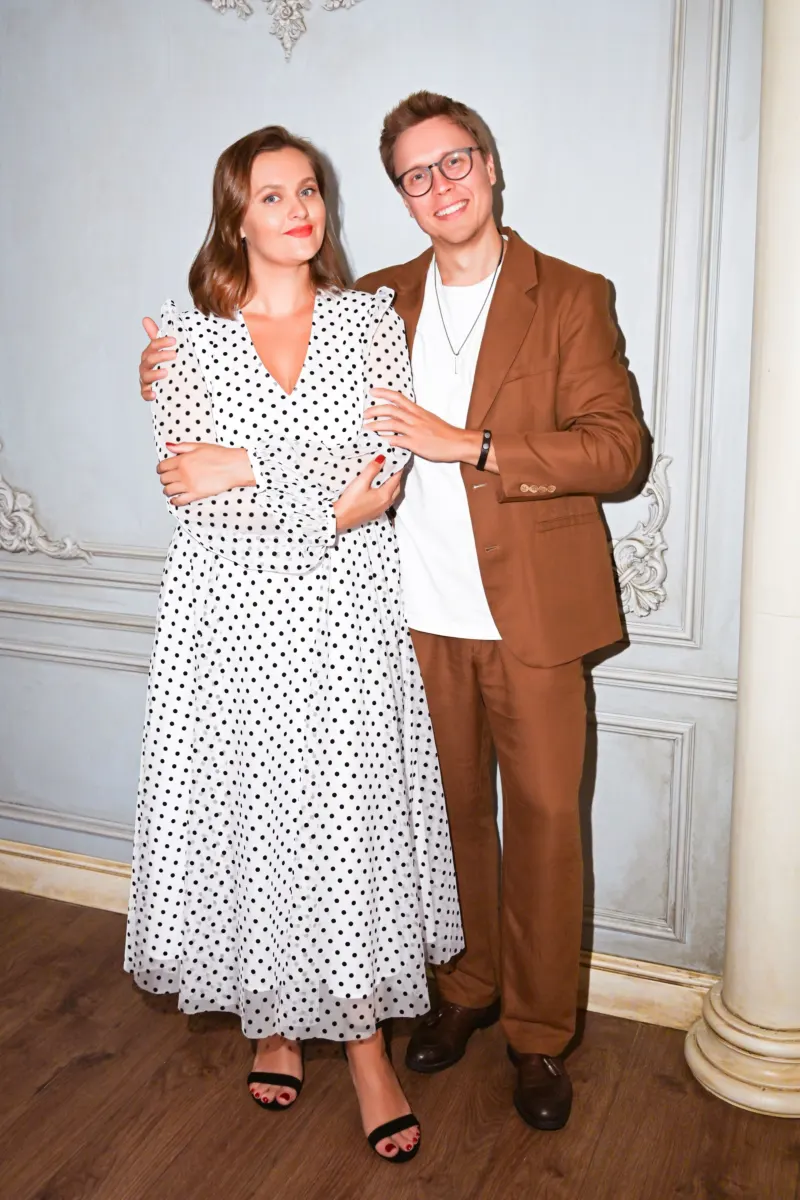
- A plain or printed midi dress, the denim jacket swapped for a black blazer or a fine cardigan worn over the shoulders, trainers swapped for block heels, ankle boots or neat flats, a small bag.
- Swaps
- Opaque tights and boots in cold weather. A leather belt to change the outline. A bright lipstick or a bold earring in place of new garments altogether.
- The detail
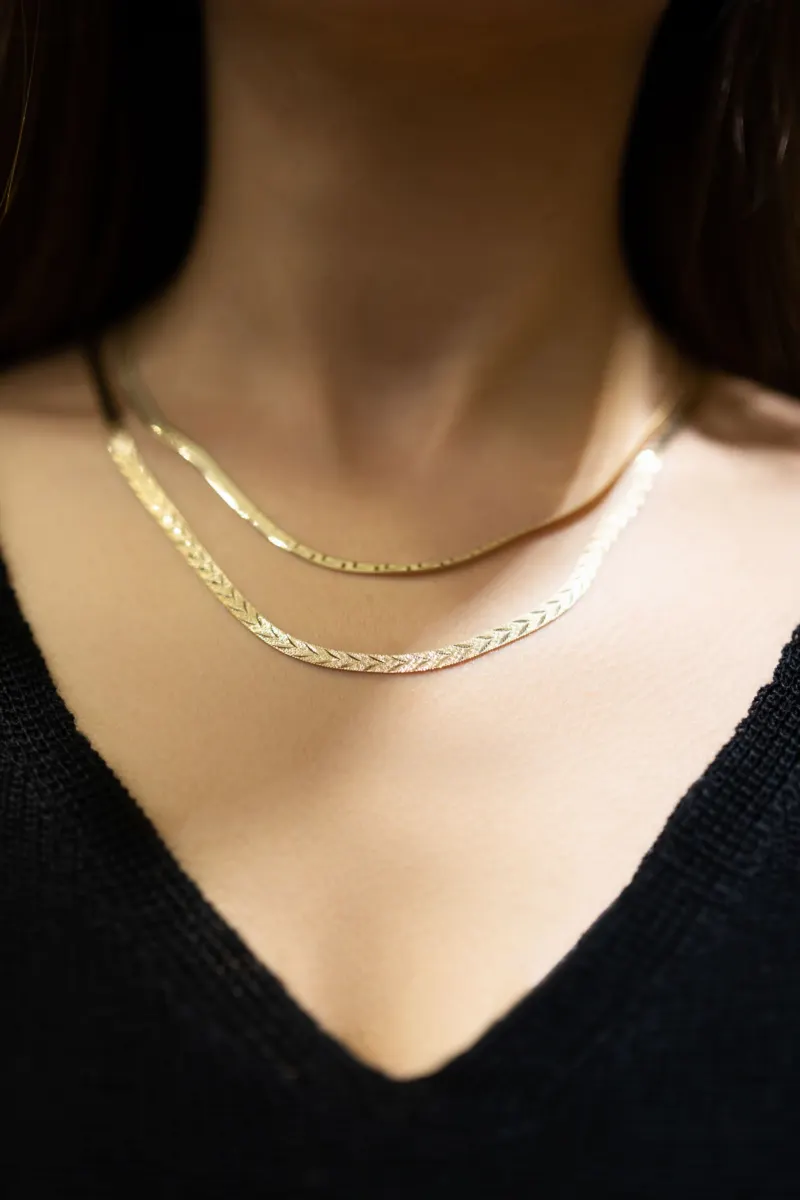
- Jewellery chosen for the neckline of the dress, since that is what sits above the table; our guide to jewellery and necklines goes through the pairings.
Chinos with a knitted polo
The chinos stay if they are clean and pressed. A collar and a finer fabric replace the T-shirt.
- Pieces
- Stone, olive or navy chinos, a knitted polo shirt or a long-sleeved shirt in a dark tone such as forest green or deep red, suede loafers or leather trainers in good condition, a jacket if the evening is cool.
- Swaps
- A camp-collar shirt in a subtle print for somewhere relaxed. A dark crew-neck jumper over a white T-shirt when you have no collared option. Dark trousers in place of pale chinos if you expect candlelight and red sauce.
- The detail
- Socks, or the lack of them. Dark socks that continue the trouser colour look quietly dressed; a bare ankle with loafers looks summery and relaxed.
The parts that take two minutes
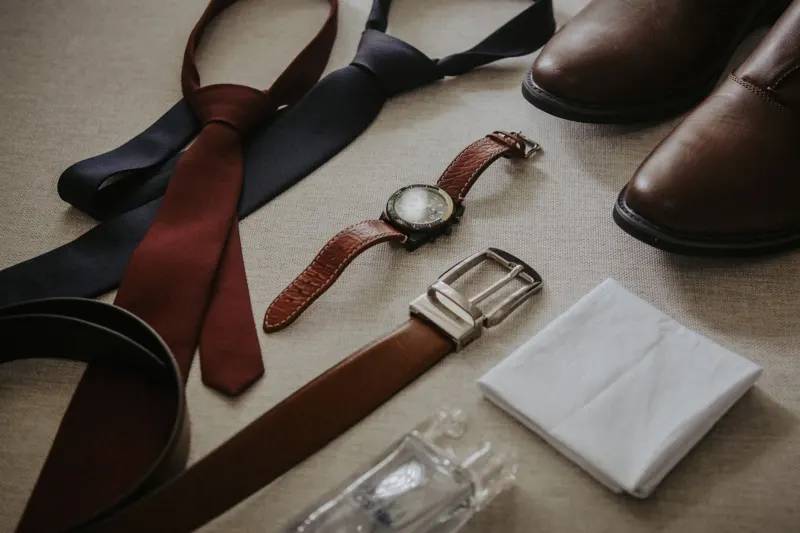
Much of what makes someone look ready for the evening is not clothing. Shoes wiped clean, a shirt pressed at the collar and front, hair redone, a watch or a ring put on. A small set of accessories that you know work together makes this stage quicker; a small accessories collection with plenty of options shows one way of arriving at it.
If there is time for only one change, make it the one nearest your face. A fresh top with the day’s trousers does far more than fresh trousers under the day’s top.